Comic: Topics / Drew’s Comic Newsroom. Source: NASA Science.
Science and Space
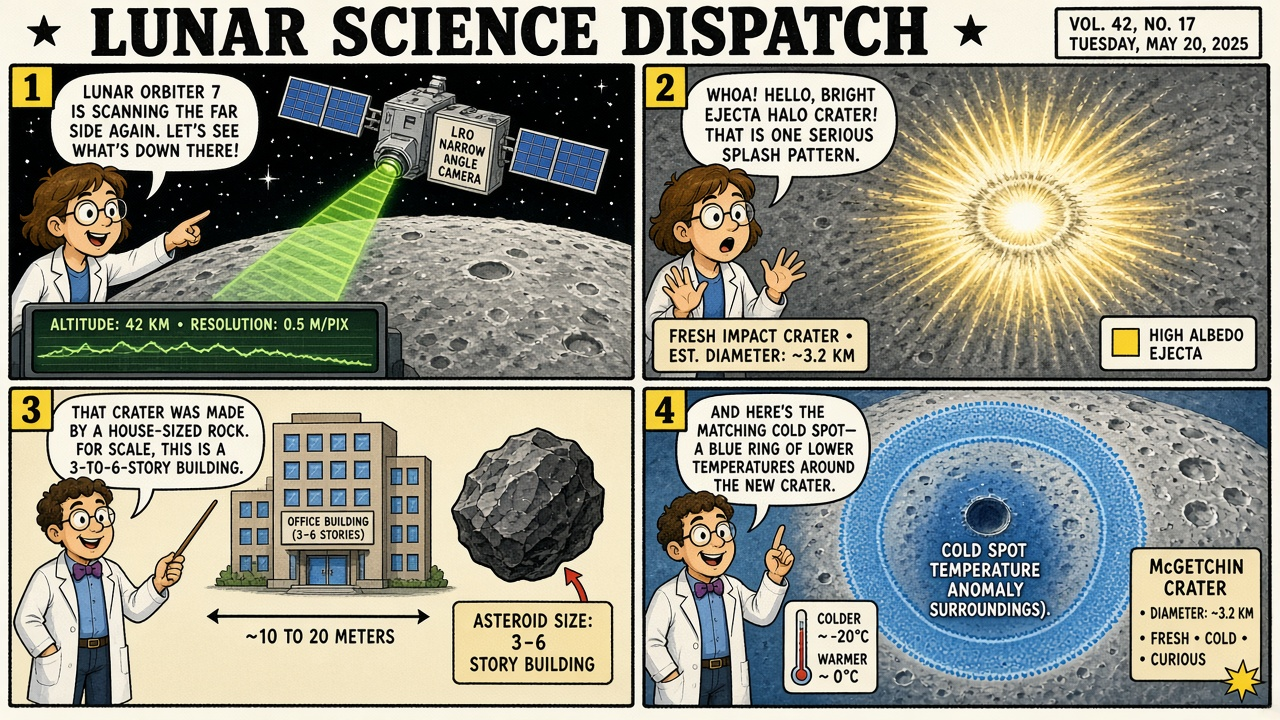
NASA Science, Sept. 16: once-in-a-century lunar impact (~728 ft wide, 141 ft deep) dated between Apr 11–May 22, 2024; Science Advances papers; 4-mile cold spot.
September 21, 2026 at 7:00 AM PDT
Comic: Topics / Drew’s Comic Newsroom. Source: NASA.
Science and Space
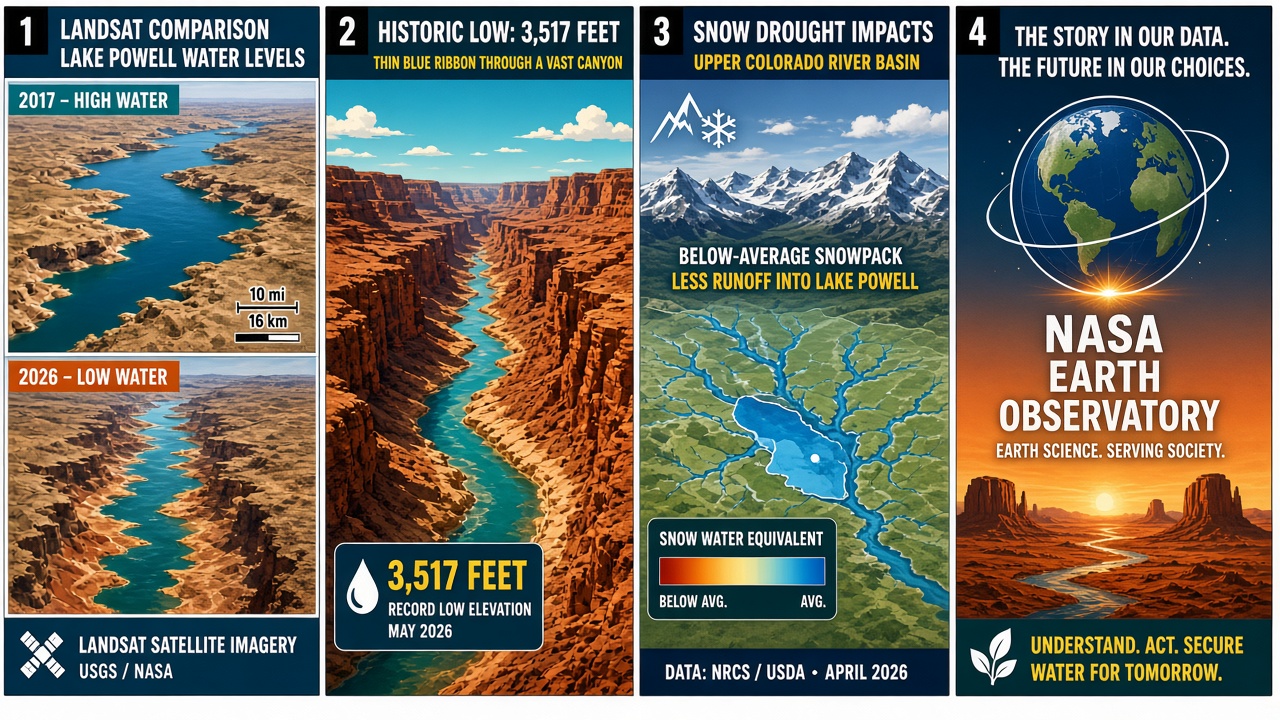
NASA Earth Observatory IOTD Sept. 18 by Lindsey Doermann; Lauren Dauphin Landsat 8. Sep 10 2026 elevation 3,517.24 ft beats Apr 13 2023 mark; still above 3,490 ft min power pool.
September 20, 2026 at 7:00 AM PDT
Comic: Topics / Drew’s Comic Newsroom. Source: NASA Goddard / XRISM.
Science and Space
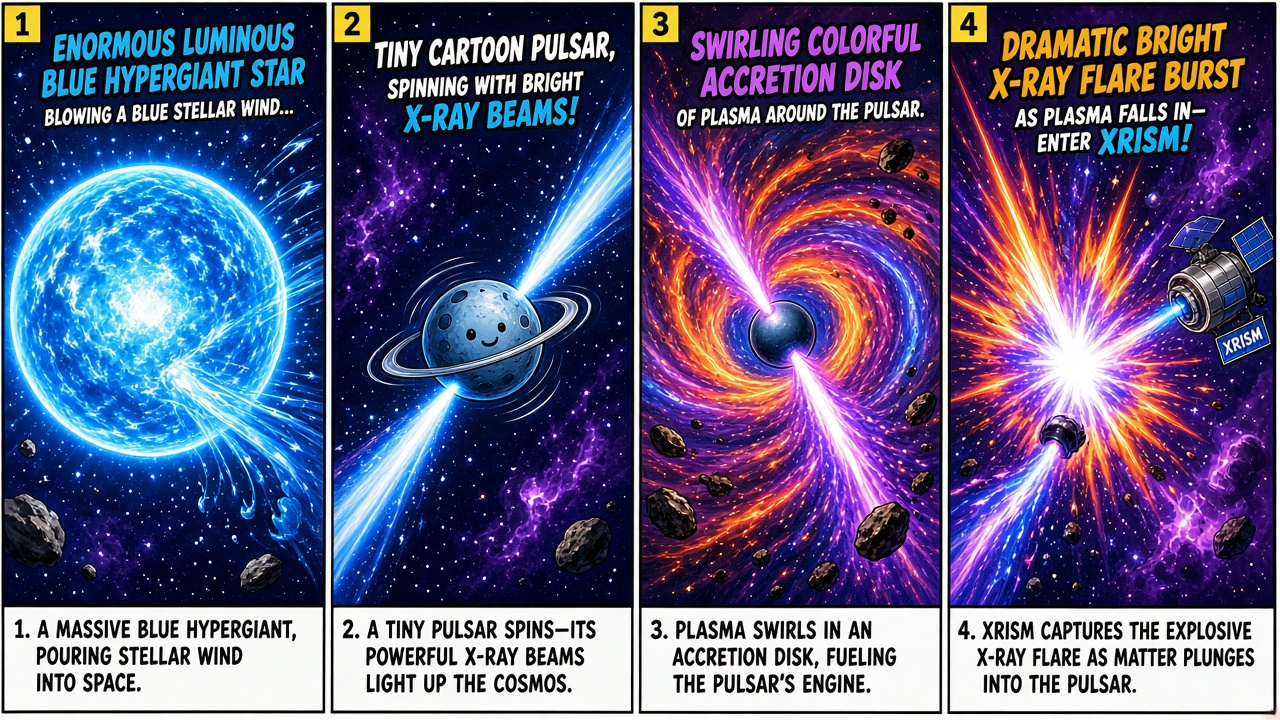
NASA SVS / Goddard, Sept. 18: BP Crucis / GX 301-2; Resolve sees iron lines redshifted as plasma races in at ~335,000 mph — first clear wind-capture signature.
September 19, 2026 at 7:00 AM PDT
Comic: Topics / Drew’s Comic Newsroom. Source: NASA.
Science and Space
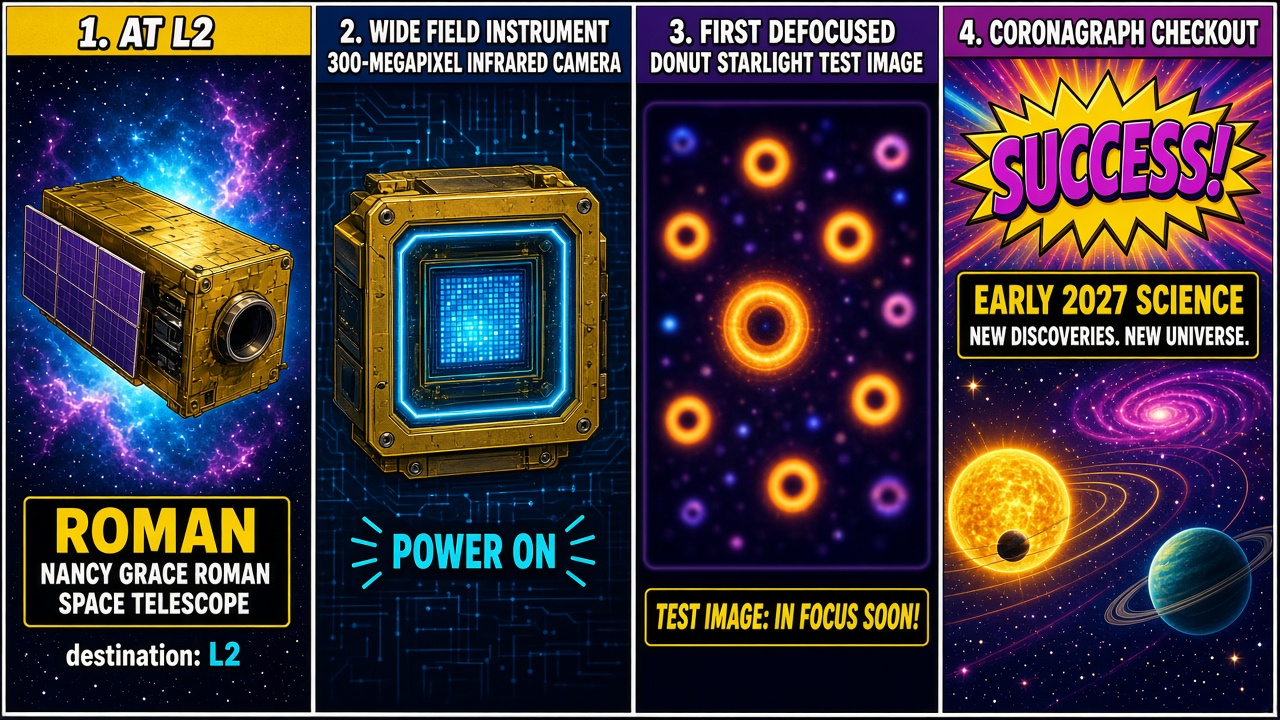
NASA Ashley Balzer, Sept. 15: WFI 300-megapixel IR camera online en route to L2; detectors cooled; first out-of-focus starlight donuts; science images early 2027. Coronagraph thermal ~72F.
September 17, 2026 at 7:00 AM PDT
Comic: Topics / Drew’s Comic Newsroom. Source: NASA Science.
Science and Space
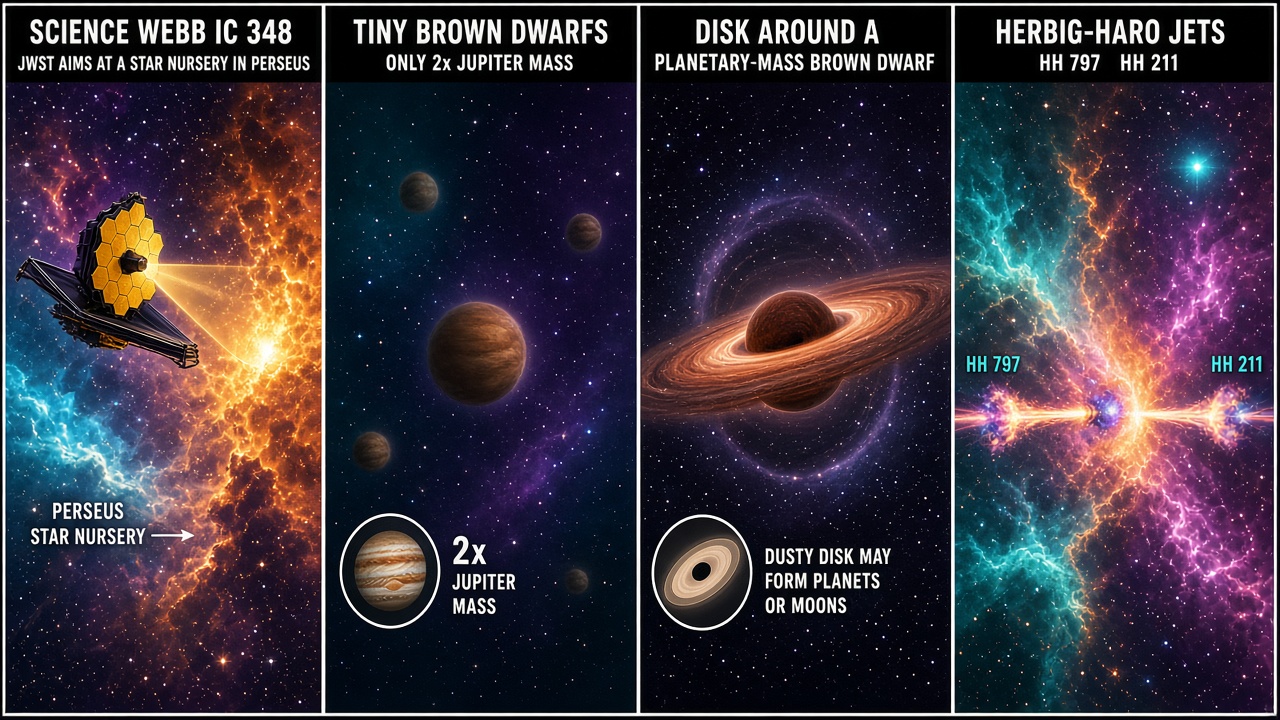
NASA, Sept. 15: IC 348 ~1,000 ly in Perseus; brown dwarfs to 0.19% Sun mass; one lightest shows a disk; unidentified hydrocarbon; HH 797 and HH 211 jets; NIRCam 2024, NIRSpec 2025.
September 16, 2026 at 7:00 AM PDT
Comic: Topics / Drew’s Comic Newsroom. Source: NASA Science.
Science and Space
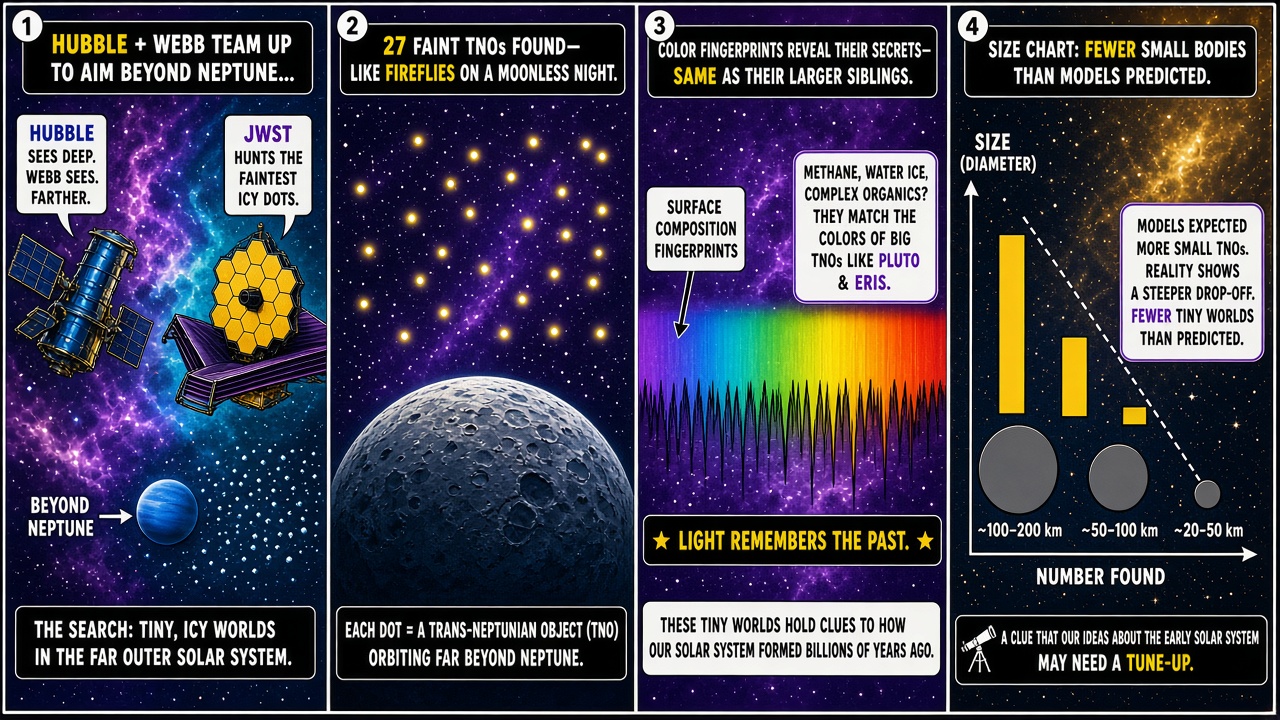
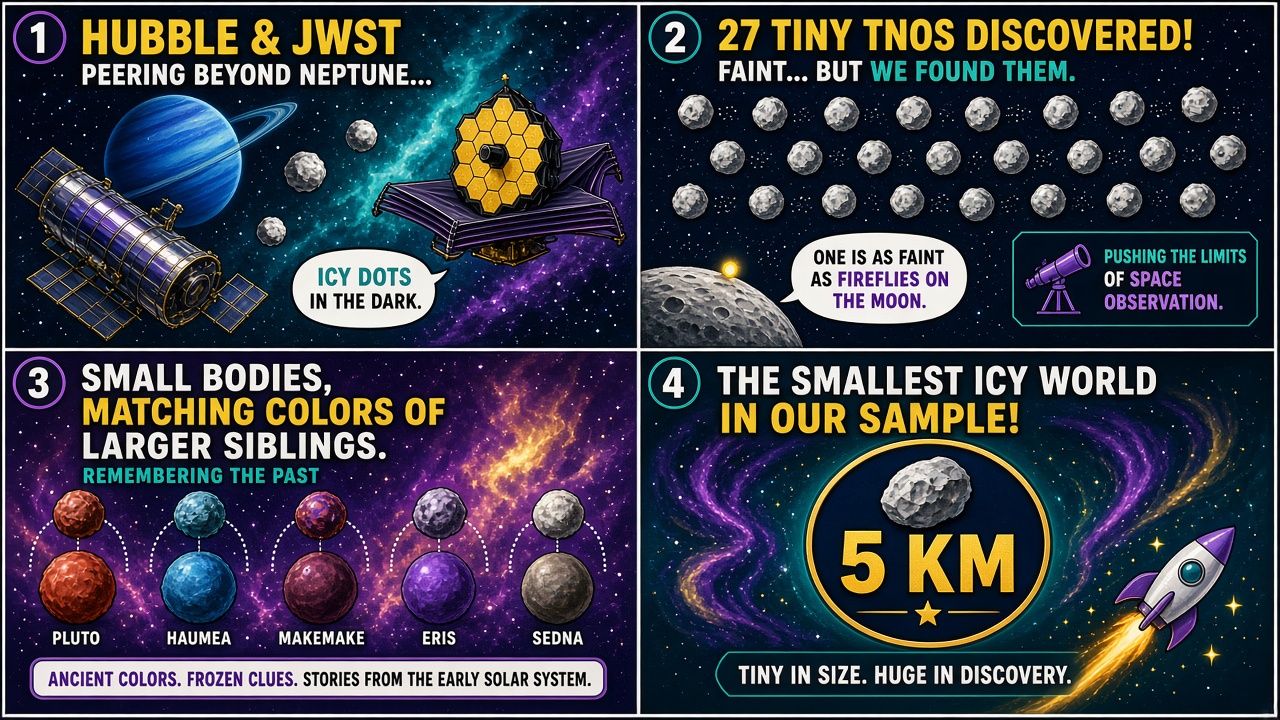
NASA, Sept. 8: joint Hubble+Webb survey; 27 new faint Trans-Neptunian Objects; colors match larger siblings; fewer small bodies than models; smallest ~3 miles / 5 km; Astronomical Journal two papers.
September 15, 2026 at 7:00 AM PDT
Comic: Topics / Drew’s Comic Newsroom. Source: Space.com / Science Advances.
Science and Space
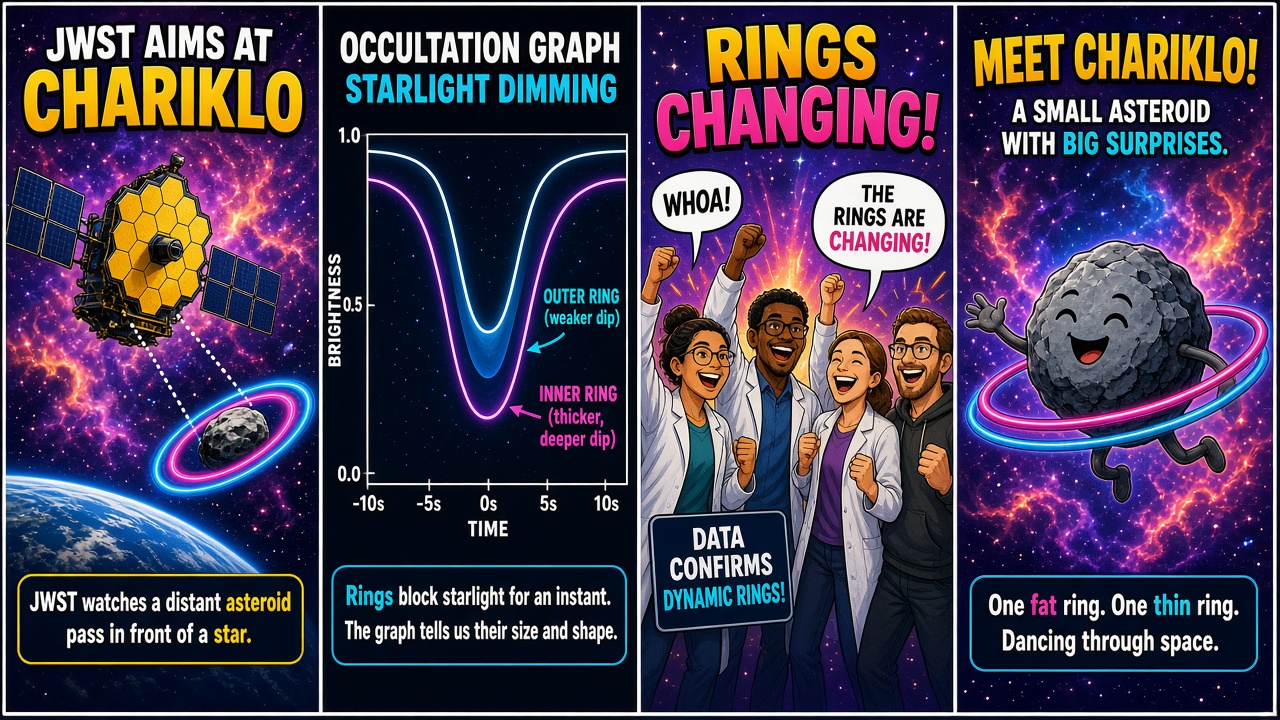
Space.com / Science Advances (Sept. 9): first planned JWST stellar occultation; inner ring denser/more opaque, outer weaker NIR; Centaur ~250 km between Saturn and Uranus; IAA-CSIC led; Gaia star fix.
September 14, 2026 at 7:00 AM PDT
Comic: Topics / Drew’s Comic Newsroom. Source: NASA Science.
Science and Space
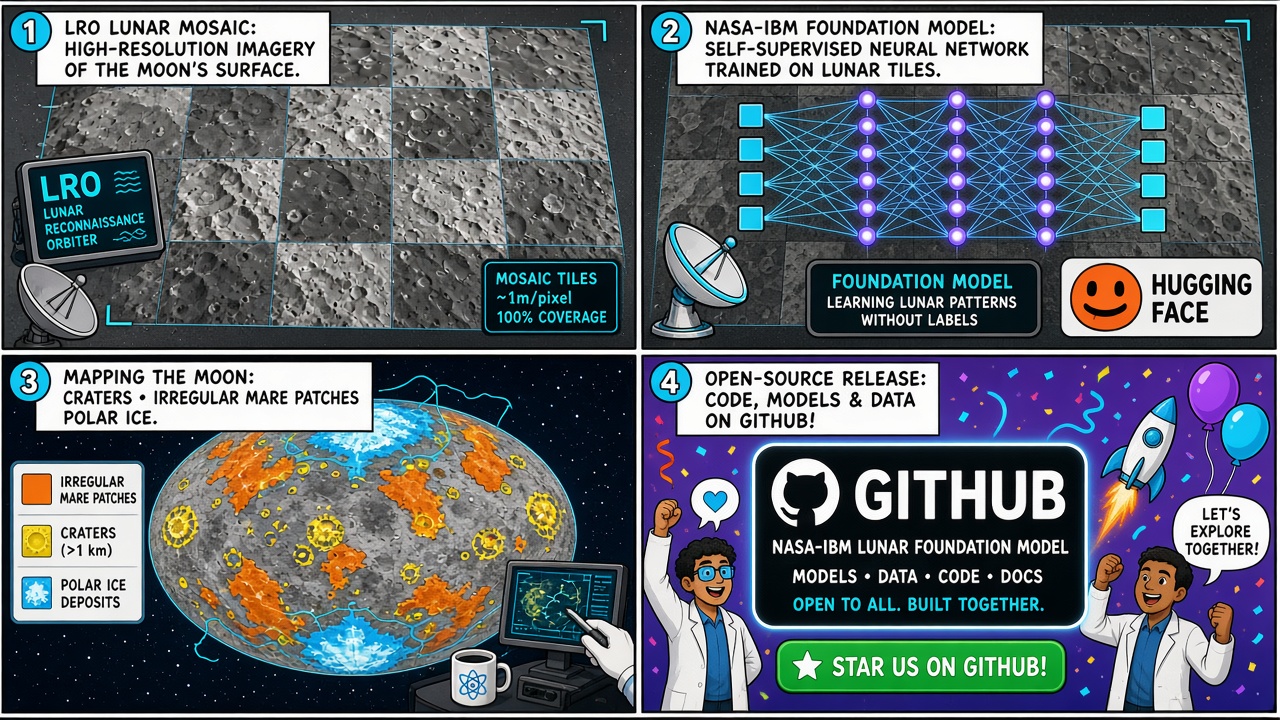
NASA Science, Sept. 10: open-source lunar AI trained on ~2M LRO tiles; crater mapping, irregular mare patches, polar ice prospectivity; open science release.
September 13, 2026 at 7:00 AM PDT
Comic: Topics / Drew’s Comic Newsroom. Source: NASA Science / Chandra.
Science and Space
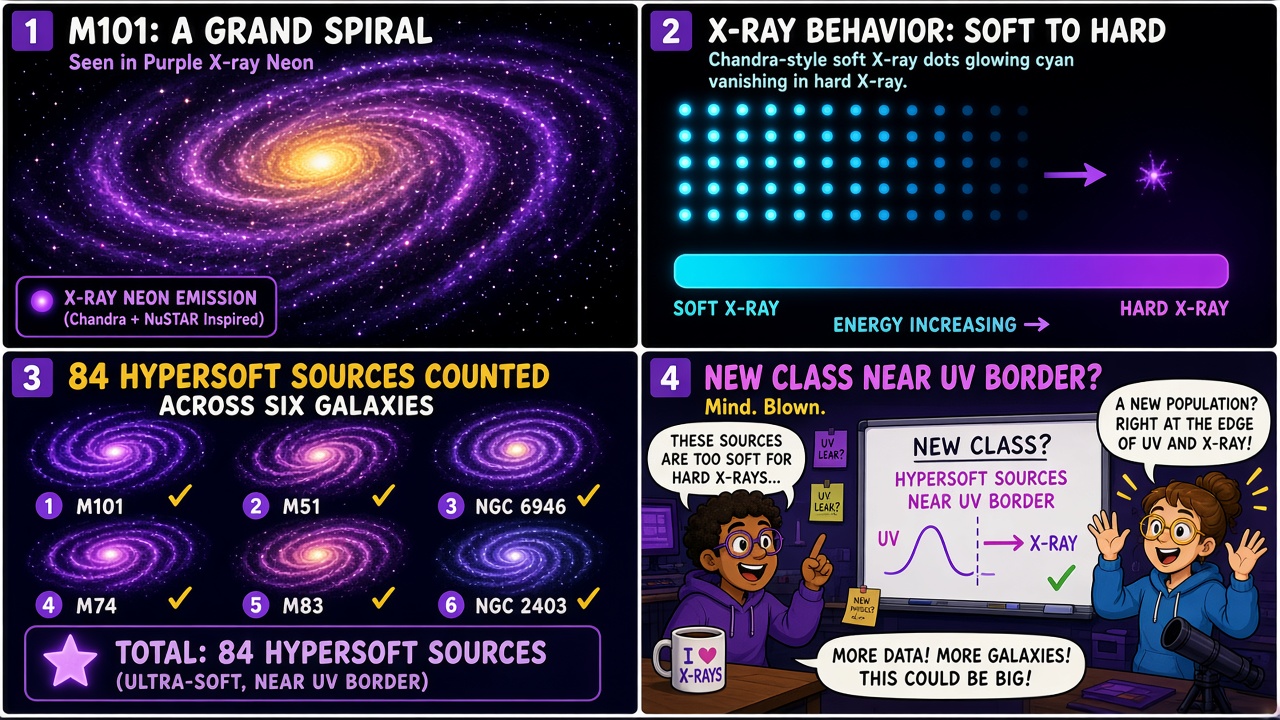
NASA Chandra archive: 84 hypersoft sources in M31, M101, and four ellipticals; appear in lowest-energy images, vanish higher up; intense UV; Nature Astronomy.
September 12, 2026 at 7:00 AM PDT
Comic: Topics / Drew’s Comic Newsroom. Source: ESA/Webb / NASA.
Science and Space
ESA/Webb: MIRI spectrum of IRS 3, ~0.55 light-years from Sgr A*, shows oxygen-rich silicates and the first clear water in its envelope; A&A / MICONIC GTO.
September 11, 2026 at 7:00 AM PDT
Comic: Topics / Drew’s Comic Newsroom. Source: NASA.
Science and Space
NASA, Sept. 8: joint survey discovers 27 faint Trans-Neptunian Objects; colors match larger siblings; fewer small bodies than some models predicted.
September 10, 2026 at 7:00 AM PDT
Comic: Topics / Drew’s Comic Newsroom. Source: arXiv.
Science and Space
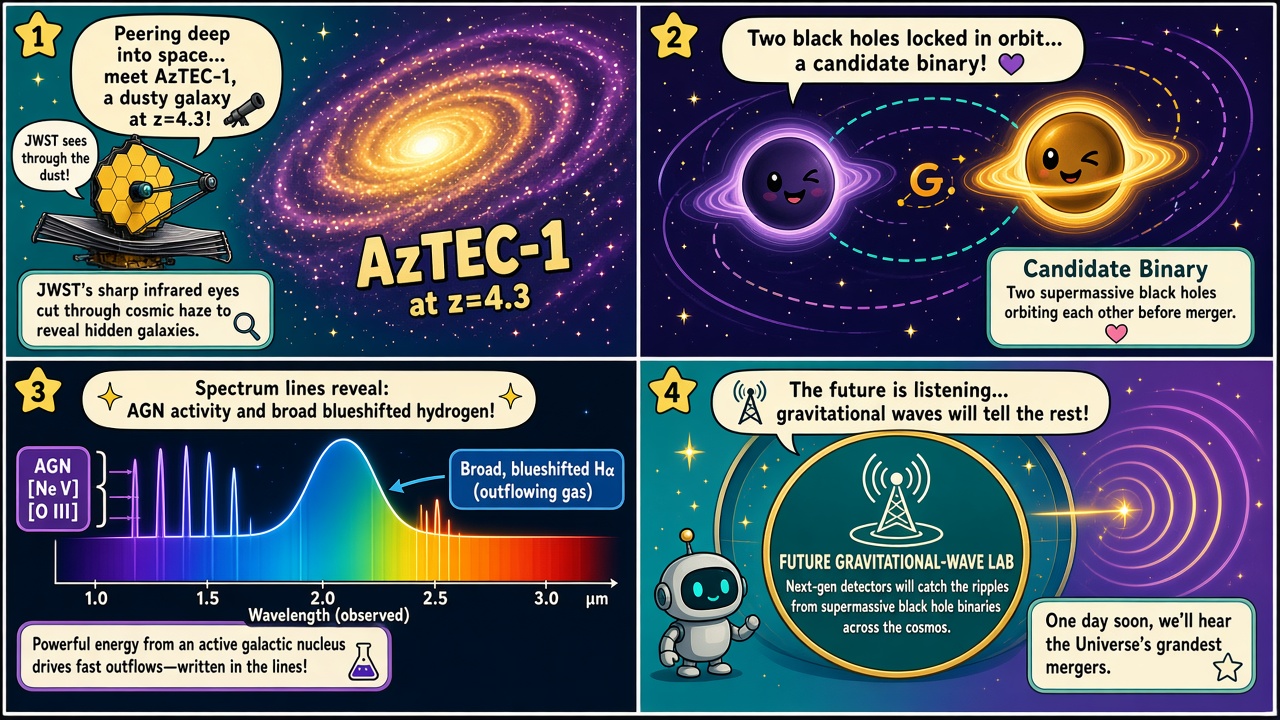
arXiv 2609.01711: NIRSpec spectra of the bright z=4.3 sub-mm galaxy hint at a supermassive black hole binary after a past merger.
September 9, 2026 at 7:00 AM PDT
Comic: Topics / Drew’s Comic Newsroom. Source: arXiv / AJ (accepted).
Science and Space
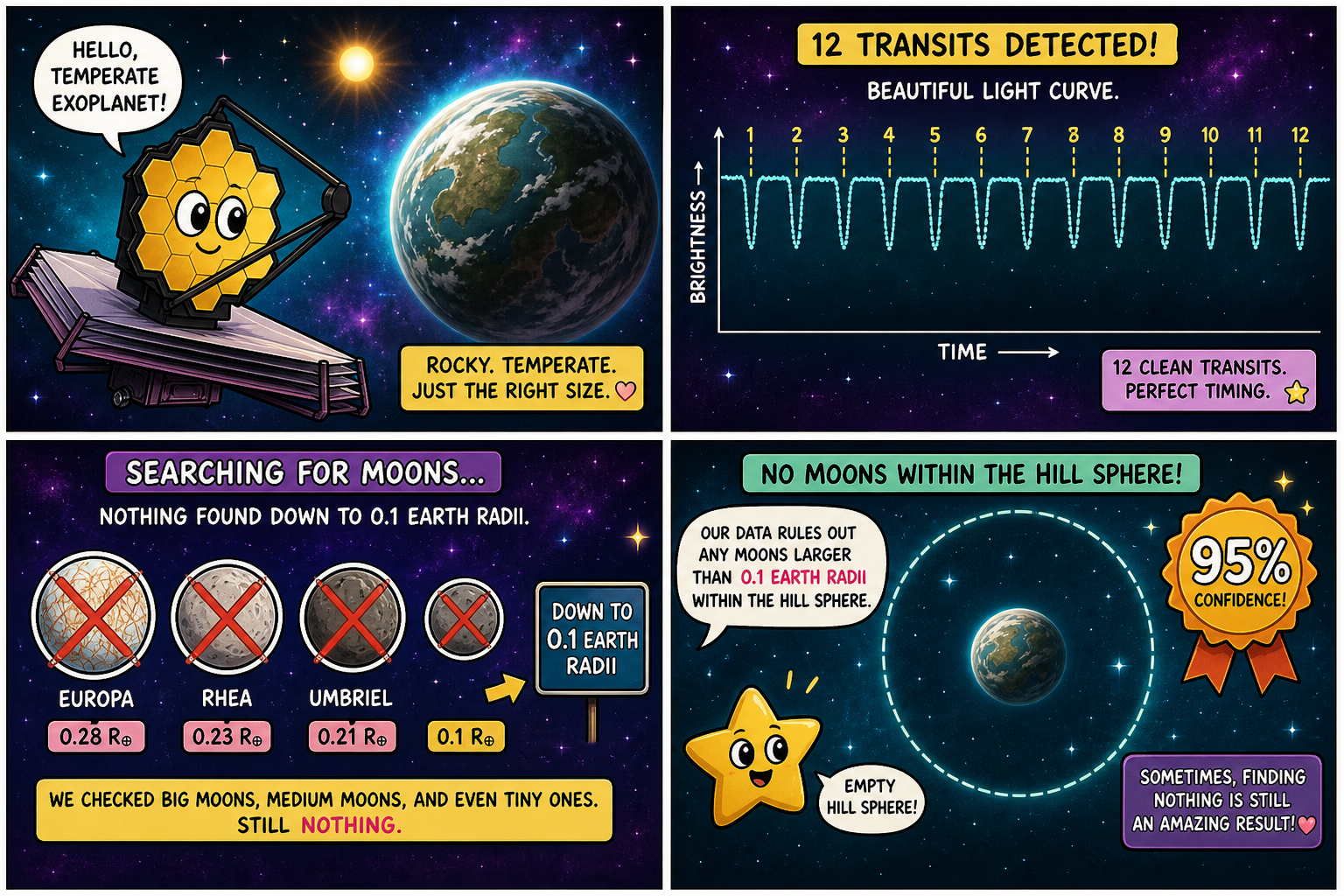
Twelve transits, no moon signal: David Kipping’s search excludes 0.1 Earth-radius moons across the Hill region at 95% confidence—the most sensitive exomoon hunt yet.
September 8, 2026 at 7:00 AM PDT
Comic: Topics / Drew’s Comic Newsroom. Source: Live Science / APL Electronic Devices.
Science and Space
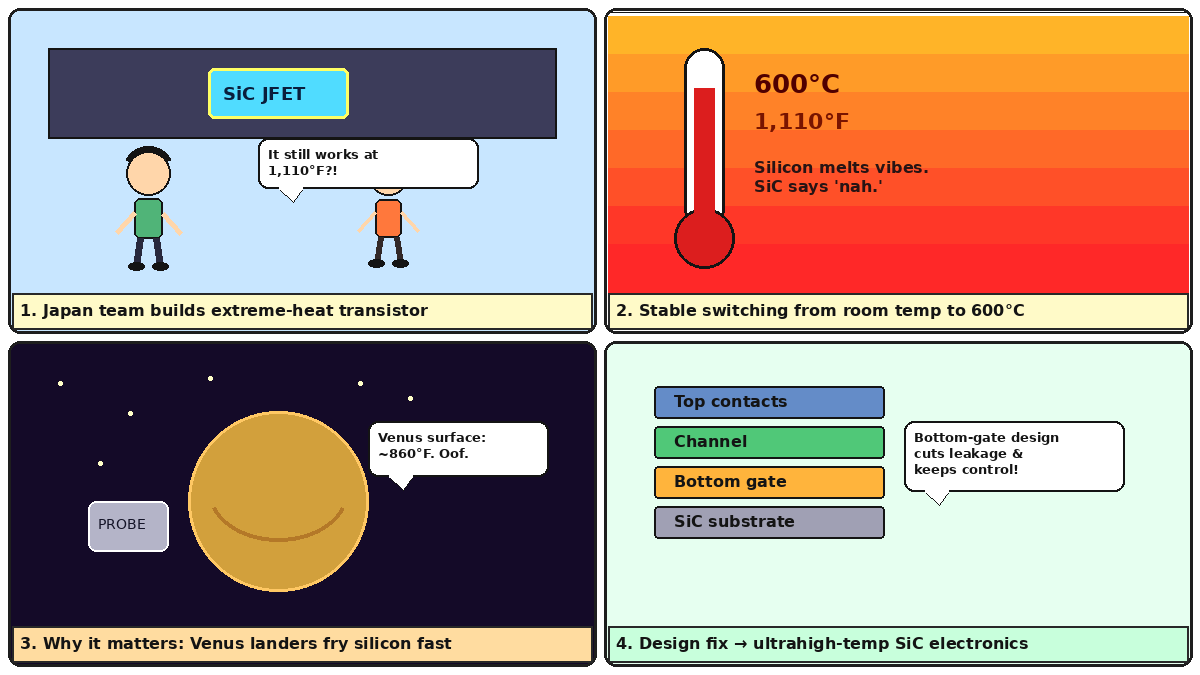
Japanese researchers report a bottom-gate SiC JFET that stays controllable where ordinary silicon electronics would fail—opening a path for longer-lived Venus surface probes.
September 7, 2026 at 7:00 AM PDT
Comic: Topics / Drew’s Comic Newsroom. Source: Scientific Inquirer / The Astronomical Journal.
Science and Space
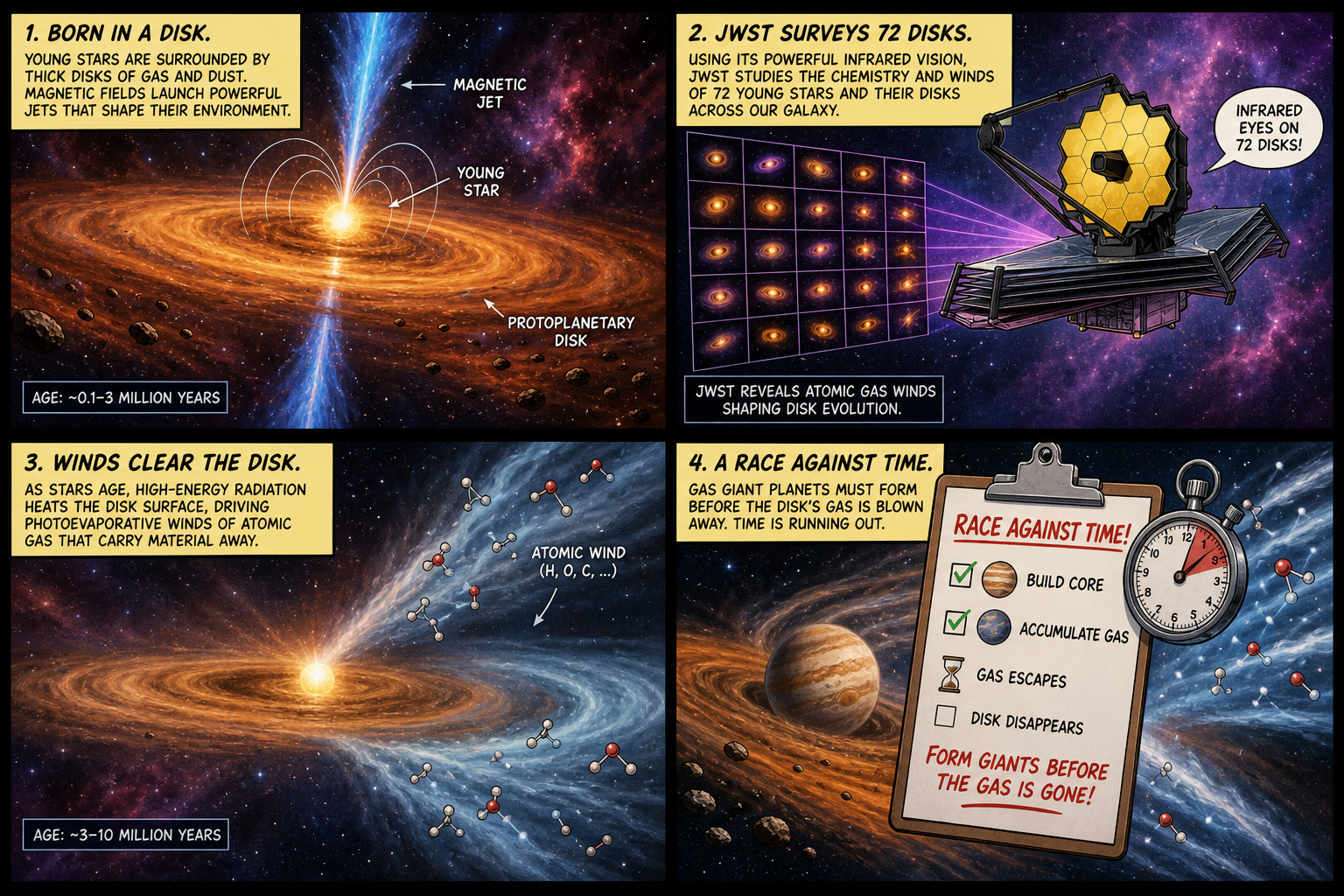
A 72-disk MIRI survey shows young systems shifting from magnetic jets to photoevaporative winds — gas giants must form before the gas escapes.
September 6, 2026 at 7:00 AM PDT
Comic: Topics / Drew’s Comic Newsroom. Source: Ars Technica, Sept. 4, 2026.
Science and Space
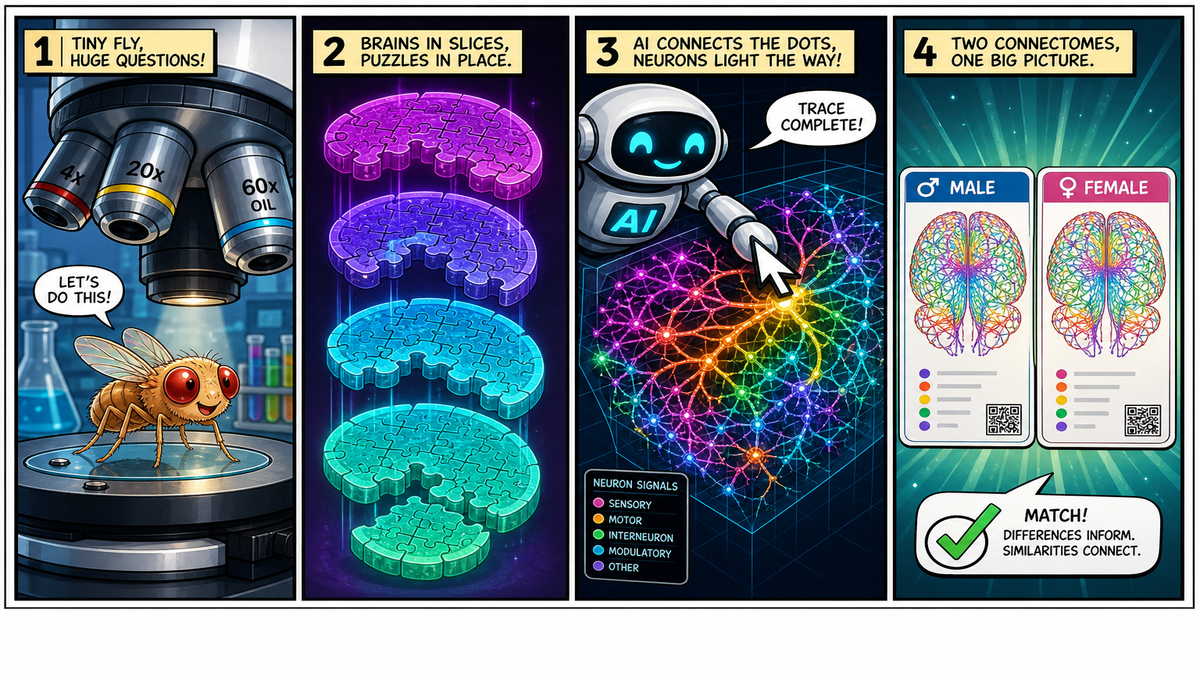
Janelia and Google finish a male Drosophila connectome to pair with this year’s female map—hundreds of millions of synapses, sex-linked wiring differences included.
September 5, 2026 at 7:00 AM PDT
Comic: Topics / Drew’s Comic Newsroom. Source: AAS Nova / ApJL, Sept. 2, 2026.
Science and Space
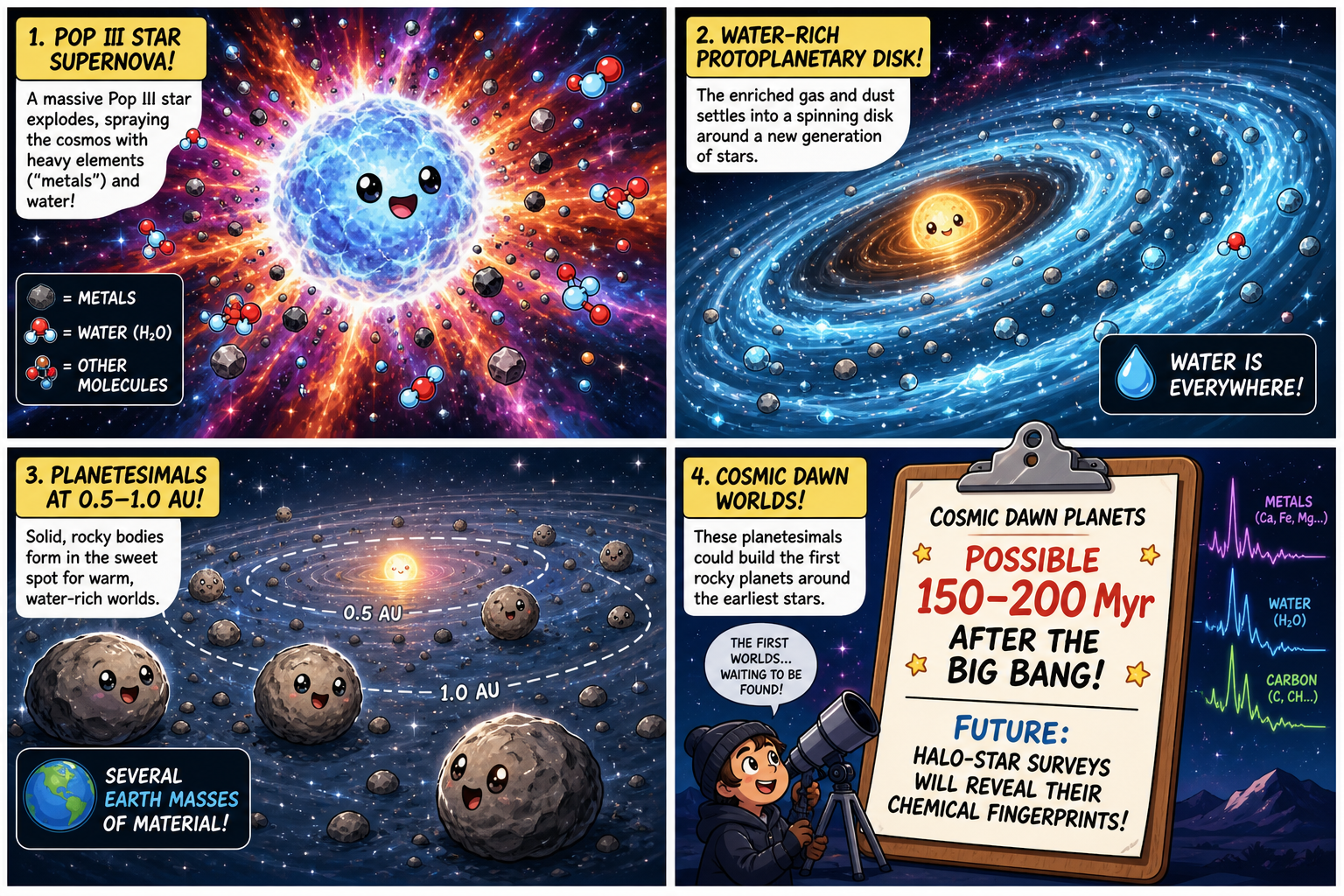
AAS Nova, Sept. 2: Vorobyov et al. model water-rich disks around low-mass stars born from the first stars’ wreckage — planets at cosmic dawn.
September 4, 2026 at 7:00 AM PDT
Comic: Topics / Drew’s Comic Newsroom. Source: AAS Nova / ApJ, Sept. 1, 2026.
Science and Space
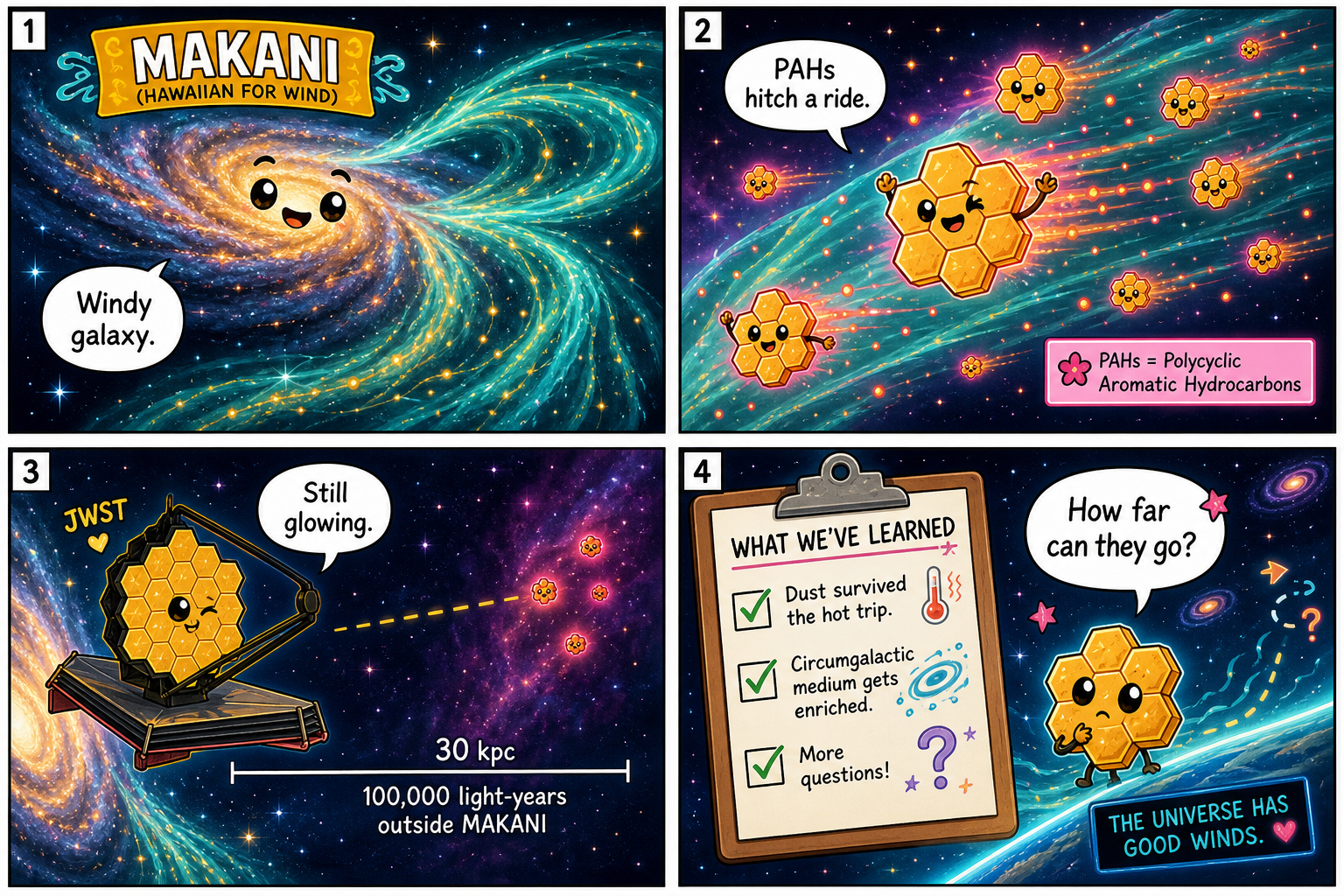
AAS Nova, Sept. 1: polycyclic aromatic hydrocarbons, the tiny infrared-bright grains in galactic winds, show up far beyond the windy galaxy’s disk in new JWST imaging.
September 2, 2026 at 7:00 AM PDT
Comic: Topics / Drew’s Comic Newsroom. Source: NASA Science, Aug. 25, 2026.
Science and Space
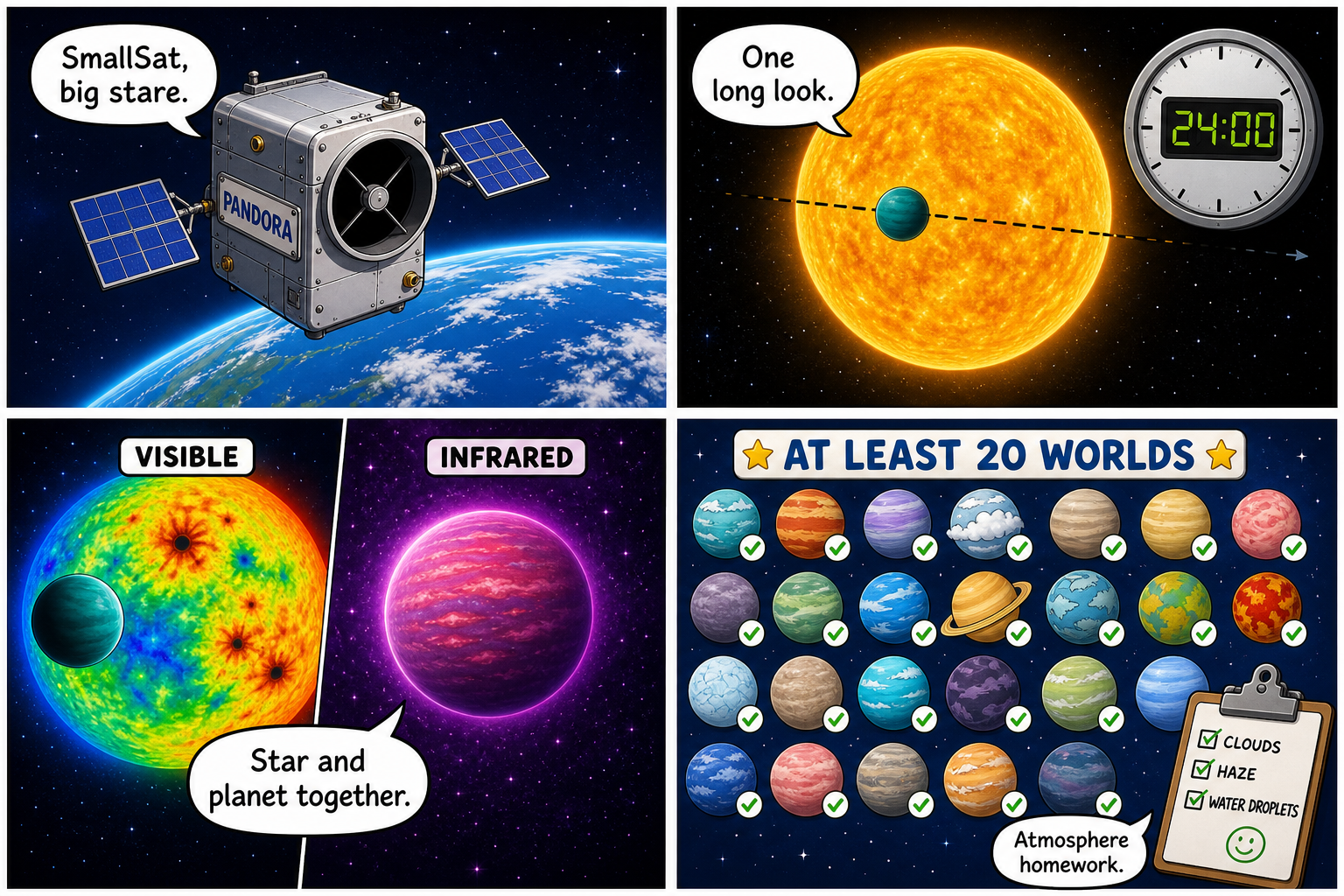
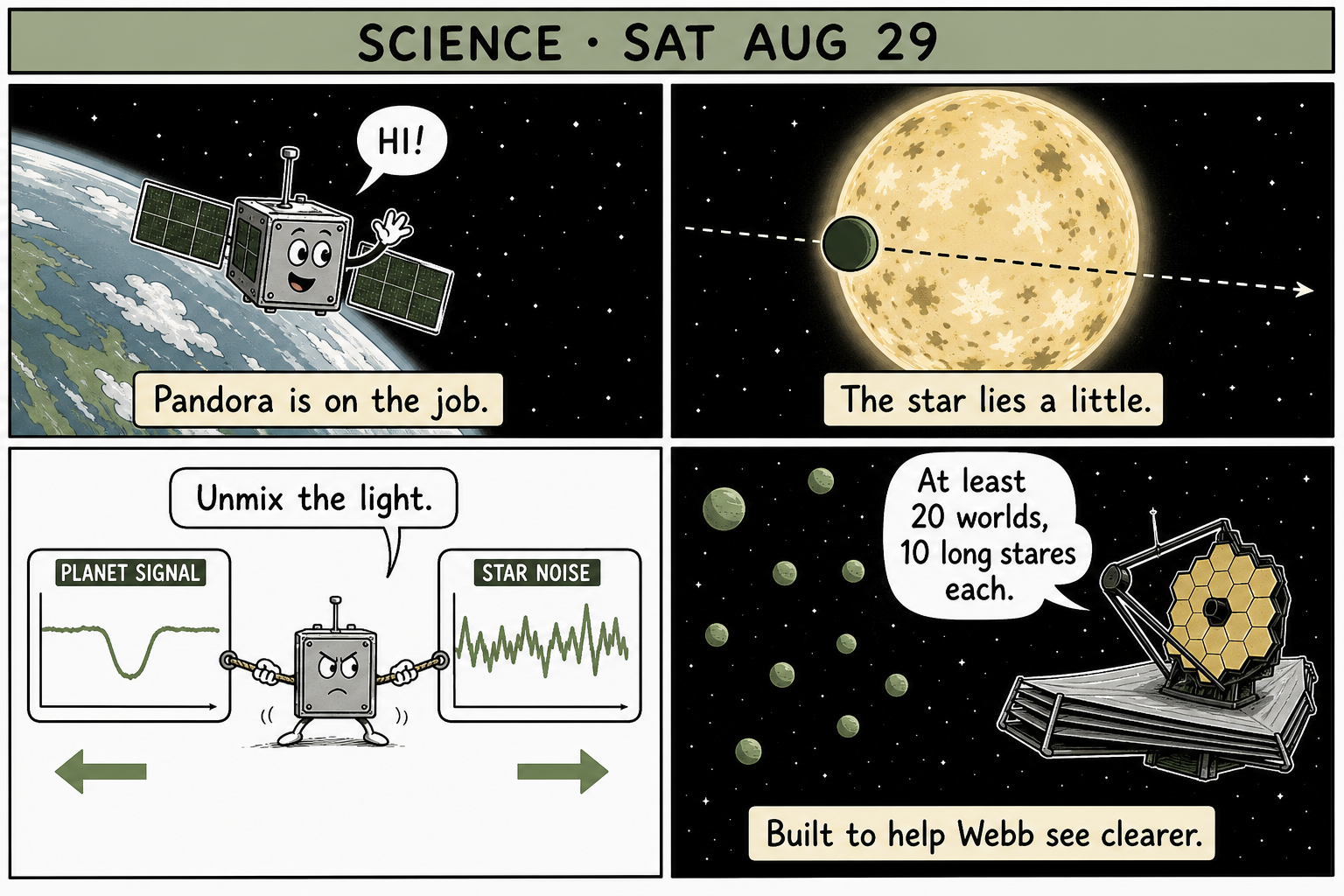
NASA’s first Astrophysics Pioneers satellite is in science mode, taking 24-hour looks at worlds and host stars together so astronomers can untangle atmospheres from stellar noise.
September 1, 2026 at 7:00 AM PDT
Comic: Topics / Drew’s Comic Newsroom. Source: AP via ABC News, Aug. 30, 2026.
Science and Space
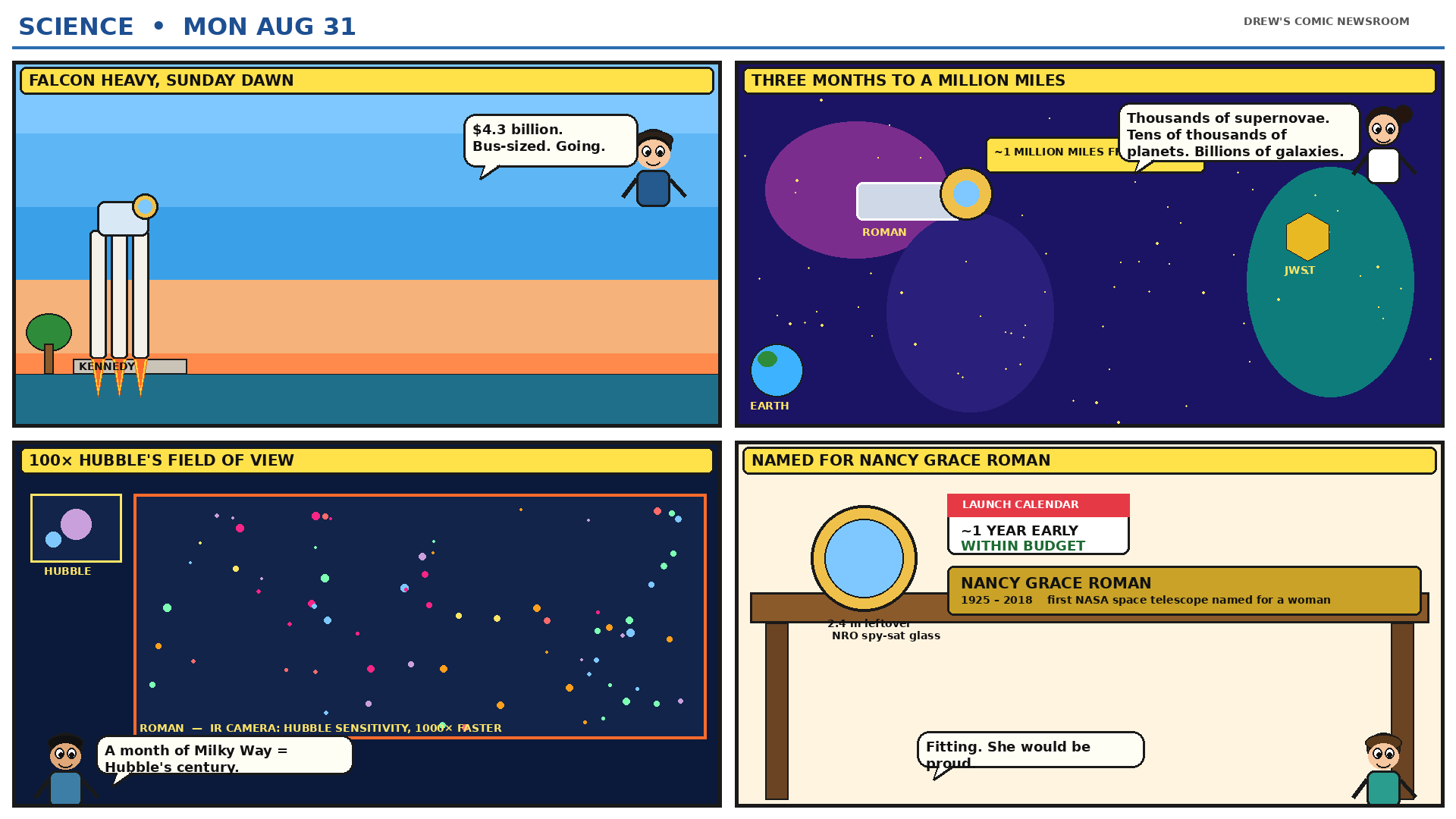
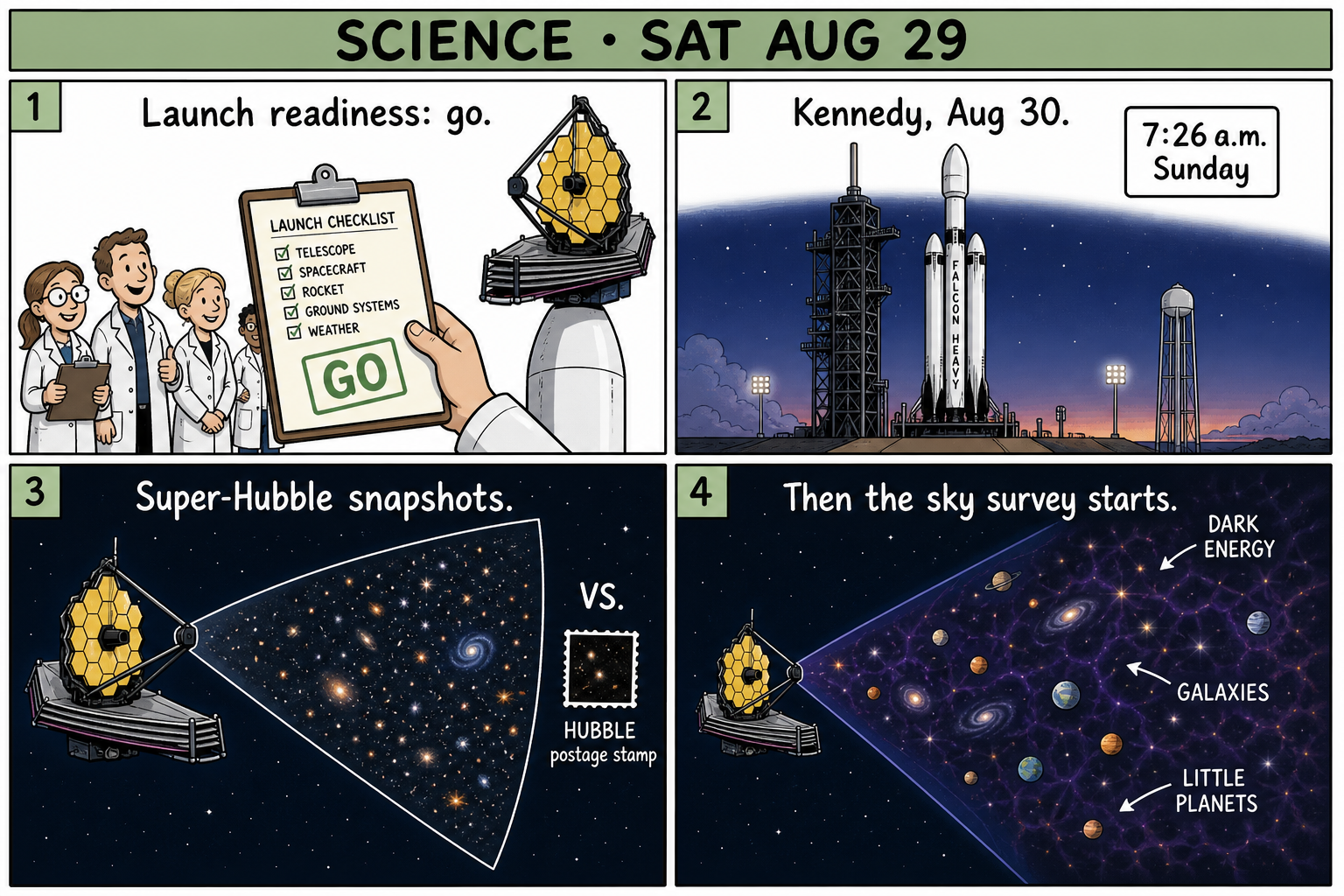
NASA’s $4.3 billion Nancy Grace Roman Space Telescope launched Sunday on a Falcon Heavy, bound for a million-mile perch near Webb with a view more than 100 times Hubble’s.
August 31, 2026 at 7:00 AM PDT
Comic: Topics / Drew’s Comic Newsroom. Source: ScienceDaily, Aug. 29, 2026.
Science and Space
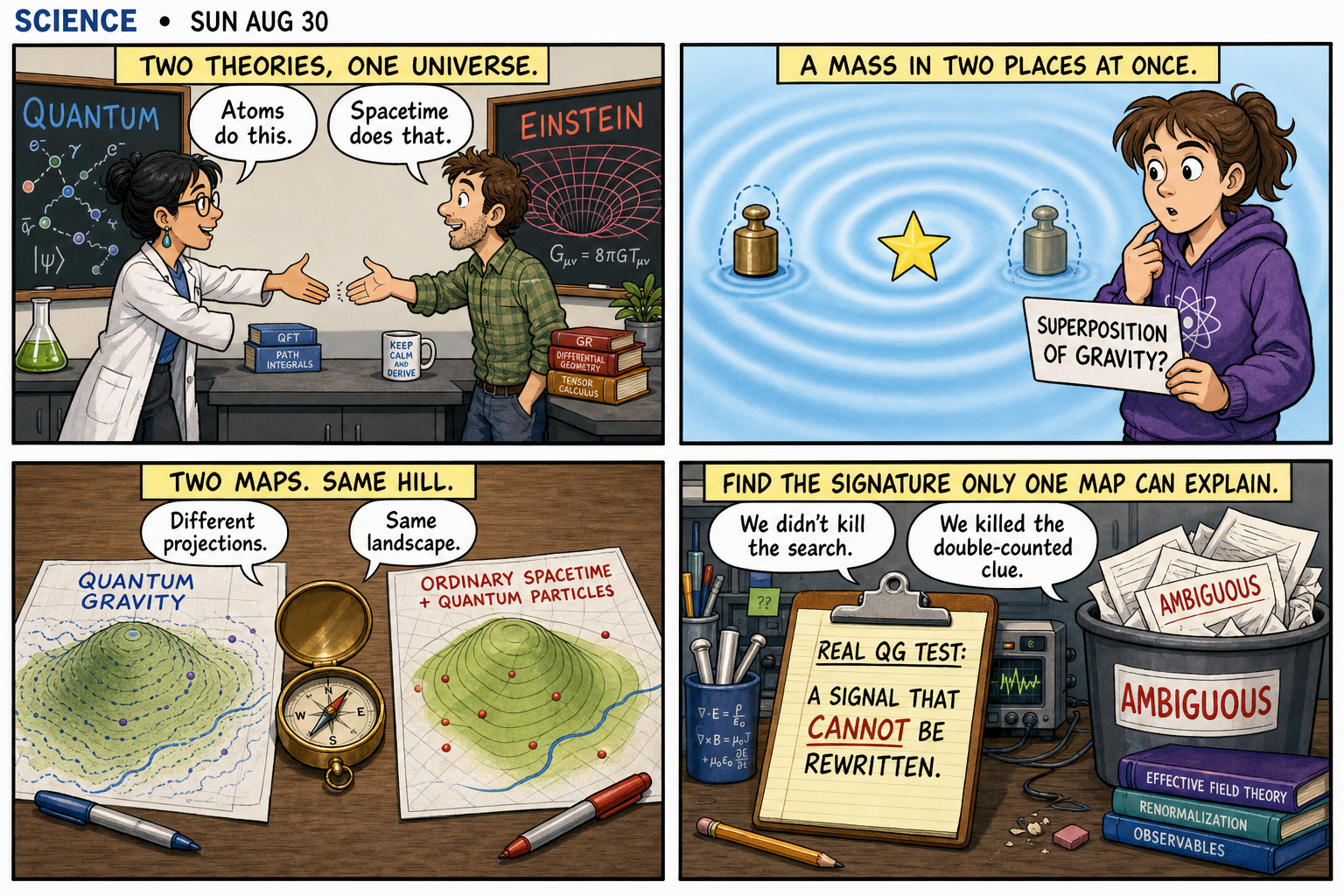
Kyushu University physicists argue that a supposed superposition of gravity can look identical to ordinary spacetime with quantum particles moving through it.
August 30, 2026 at 7:00 AM PDT
Comic: Topics / Drew’s Comic Newsroom. Source: NASA Science, Francis Reddy, Aug. 25, 2026.
Science and Space
NASA’s Pandora smallsat is now taking science data, staring at transiting planets and their spotted host stars so Webb can tell air from starlight.
August 29, 2026 at 7:19 AM PDT
Comic: Topics / Drew’s Comic Newsroom. Source: NASA Roman blog, Aug. 28, 2026.
Science and Space
NASA is go for a Sunday 7:26 a.m. EDT Falcon Heavy launch of the Roman Space Telescope from Pad 39A.
August 29, 2026 at 7:18 AM PDT
Original comic, Science desk. News: ScienceDaily / Penn State / Nature Astronomy.
Science and Space
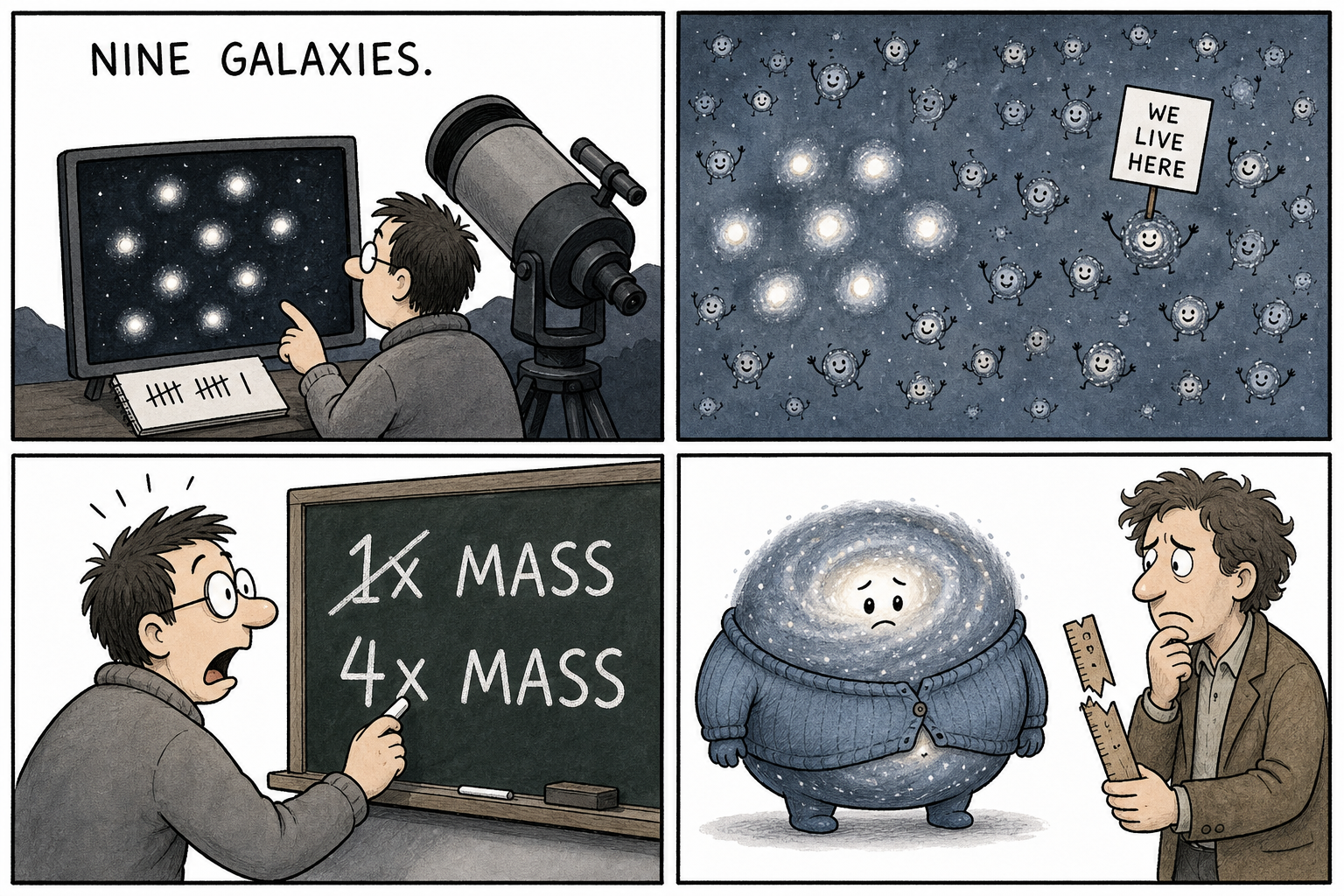
JWST plus VLT studied nine early galaxies. Hidden low-mass stars could make some of them 3–4× more massive than earlier estimates. One likely formed less than 1.5 billion years after the Big Bang. Nature Astronomy, Aug. 18, Cheng et al.
August 22, 2026 at 2:50 PM PDT
Original comic, Science desk. News: MIT Kavli / MIT News / Nature.
Science and Space
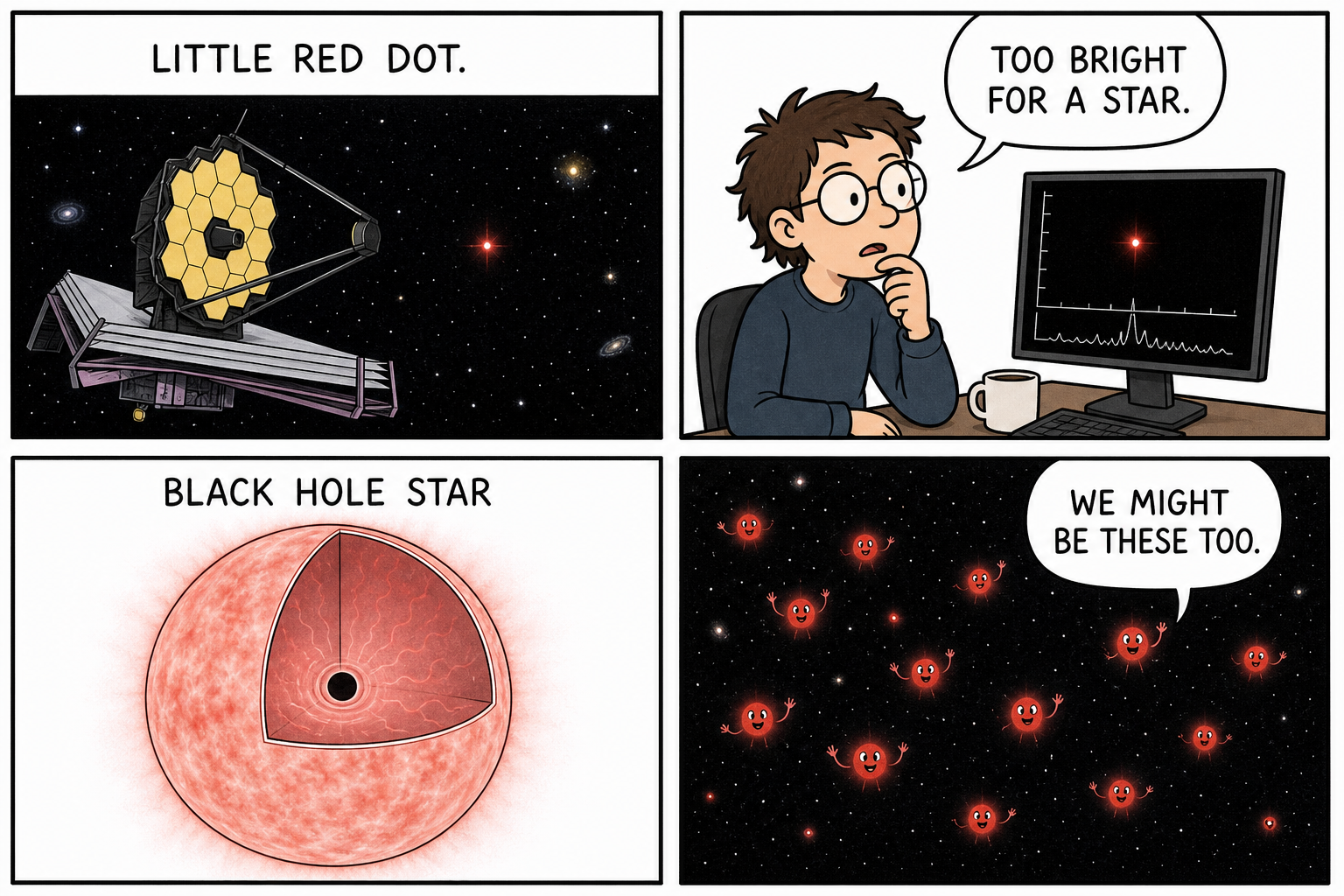
Too bright for a star.
August 22, 2026 at 2:47 PM PDT
Original comic, Science desk. News: NASA Roman blog, Aug. 21, 2026.
Science and Space
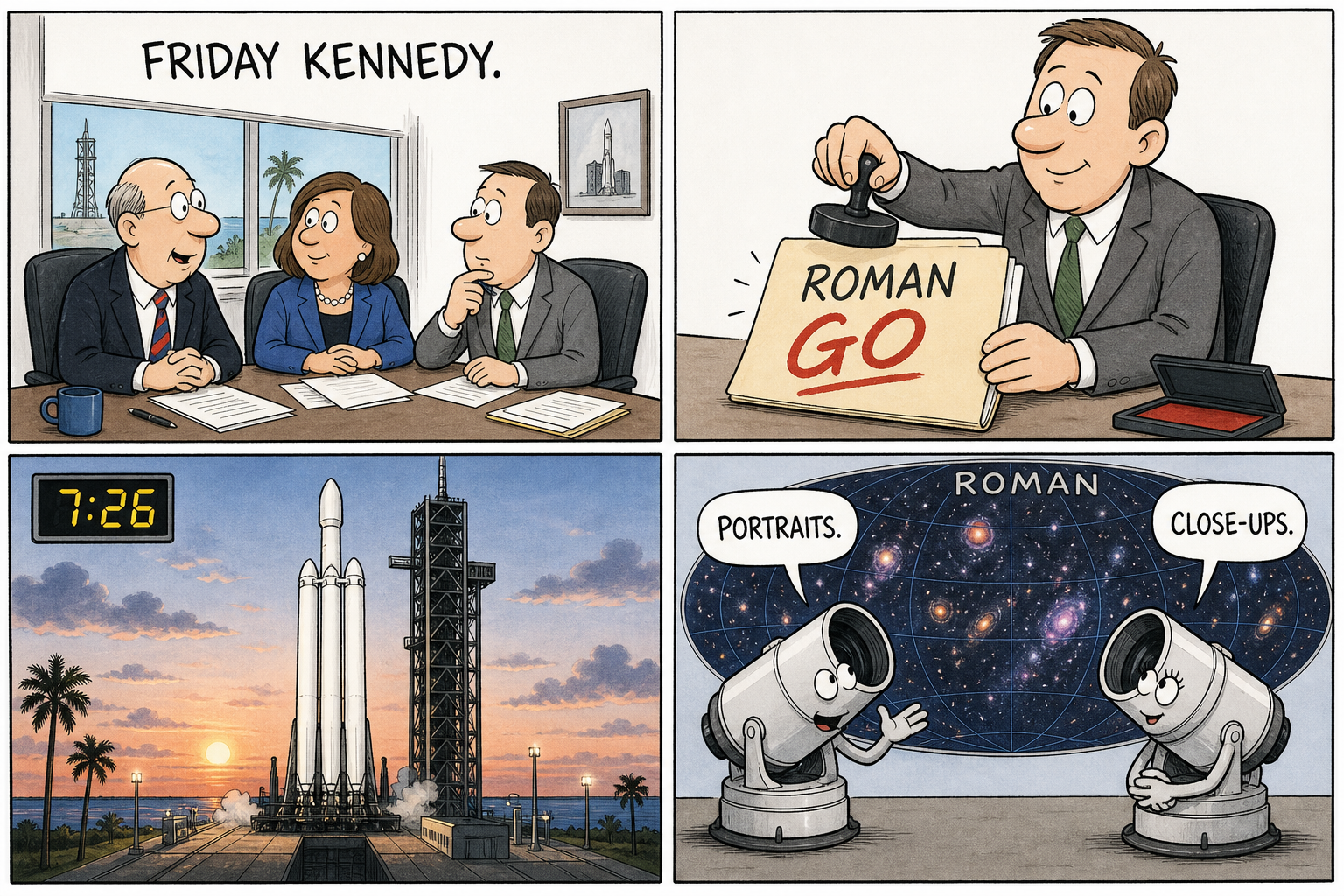
NASA, the Roman team, and SpaceX finished a Flight Readiness Review on Friday at Kennedy. Target is no earlier than 7:26 a.m. EDT Sunday, Aug. 30, Falcon Heavy, Pad 39A. Nine months ahead is only in the Aug. 10 operations post, not Friday’s FRR note — left out of the strip.
August 22, 2026 at 2:40 PM PDT