
Finance
An index fund is a shopping cart, not a stock pick
What happened
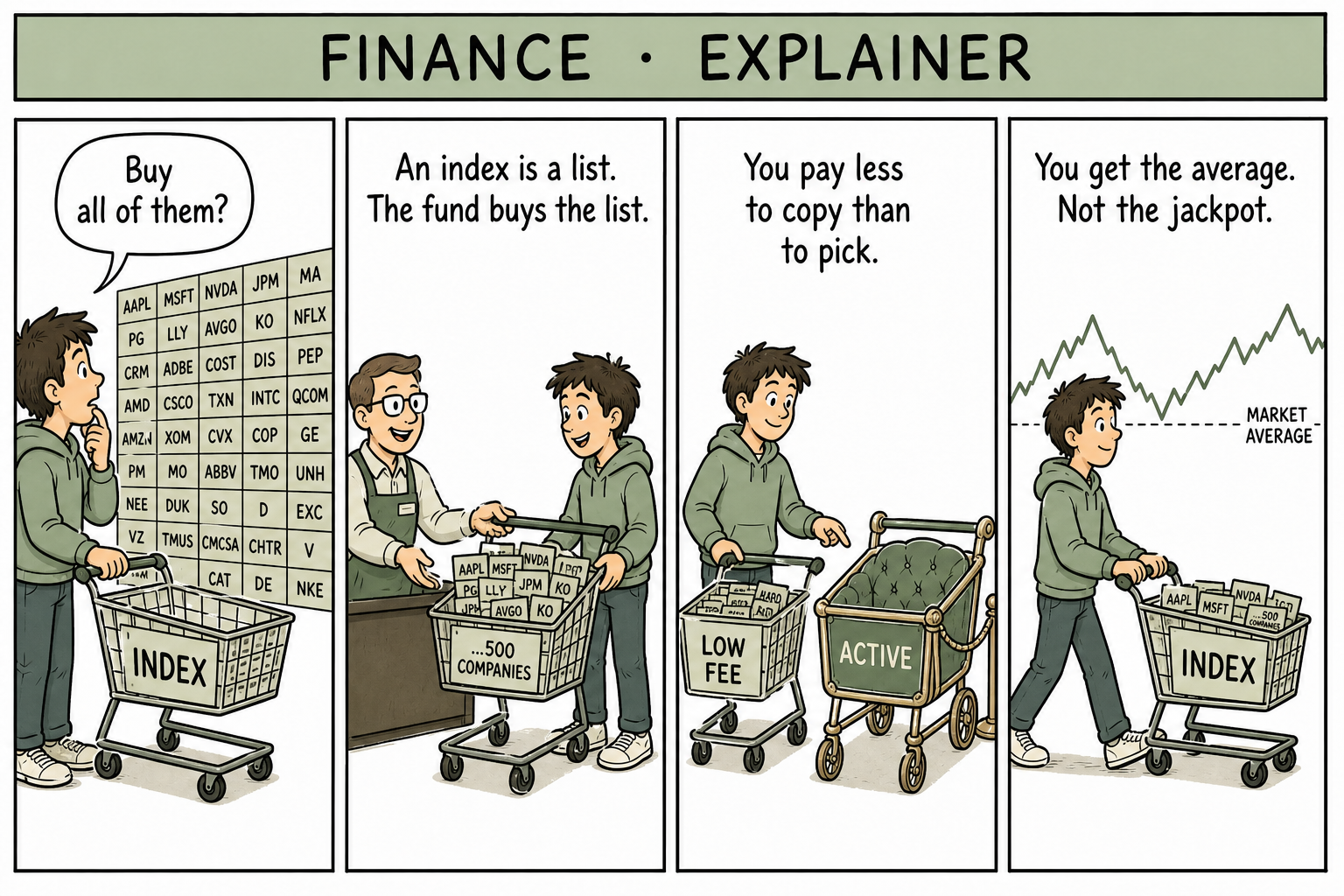
An index is just a list. You cannot buy the list itself. An index fund is the cart that holds what is on it. Fidelity’s Learning Center, dated March 26, 2026, describes the fund as a mutual fund or ETF that aims to mimic an index such as the S&P 500, pooling many investors so a manager can own the same securities in roughly the same weights. The S&P 500 is a market-cap-weighted index of 500 common stocks chosen for size, liquidity, and industry representation. If the index rises, it does not mean every name went up. Enough did that the average moved. A share of an S&P 500 index fund is meant to move with that average.
Buying the fund is cheaper and simpler than buying one share of every name on the list. Fidelity’s point is access: one share generally does not cost as much as assembling the whole basket yourself. Index funds come in themes: broad market, sector, domestic, international, bond, dividend, socially responsible, growth, value. Other indexes named on the page include the Russell 2000, MSCI ACWI ex USA, and Bloomberg U.S. Aggregate Bond. The cart still copies a list. The list is what changes.
Why it matters
Because the job is to copy, not to pick, fees tend to stay low. Fidelity cites a 0.015% expense ratio on its 500 Index Fund as of April 29, 2025, against 1% or more on many active funds, and notes some Fidelity ZERO funds at 0% as of Dec. 30, 2025. Index funds also trade less, which can mean fewer taxable distributions, especially in ETF form. You get diversification in one purchase instead of two names you hope will not sink together. You also get the duds in the average. You do not get a manager who can sell before a drop. You do not get to yank names you dislike. Tracking error can leave the fund a little off the index. Some funds have investment minimums; some ETFs allow fractional shares.
The historical average return of the S&P 500, Fidelity notes, has been over 10% a year before inflation, taxes, or fees since 1957. Past performance does not guarantee future results. The tradeoff is baked in: you get the market’s average, including the duds, and you do not get the jackpot of picking only winners. That is the comic’s last panel, and it is the explainer’s honest drawback, not a scare line.
Conclusion
An index fund is a shopping cart, not a stock pick. If that still sounds useful, Fidelity’s first step is an account, then cash, then a fund whose index, history, and expense ratio you actually checked. This is education, not a recommendation, and it is not a markets piece.
Source: Fidelity Learning Center