
Finance
An emergency fund is for the bill you did not put on the calendar
What happened
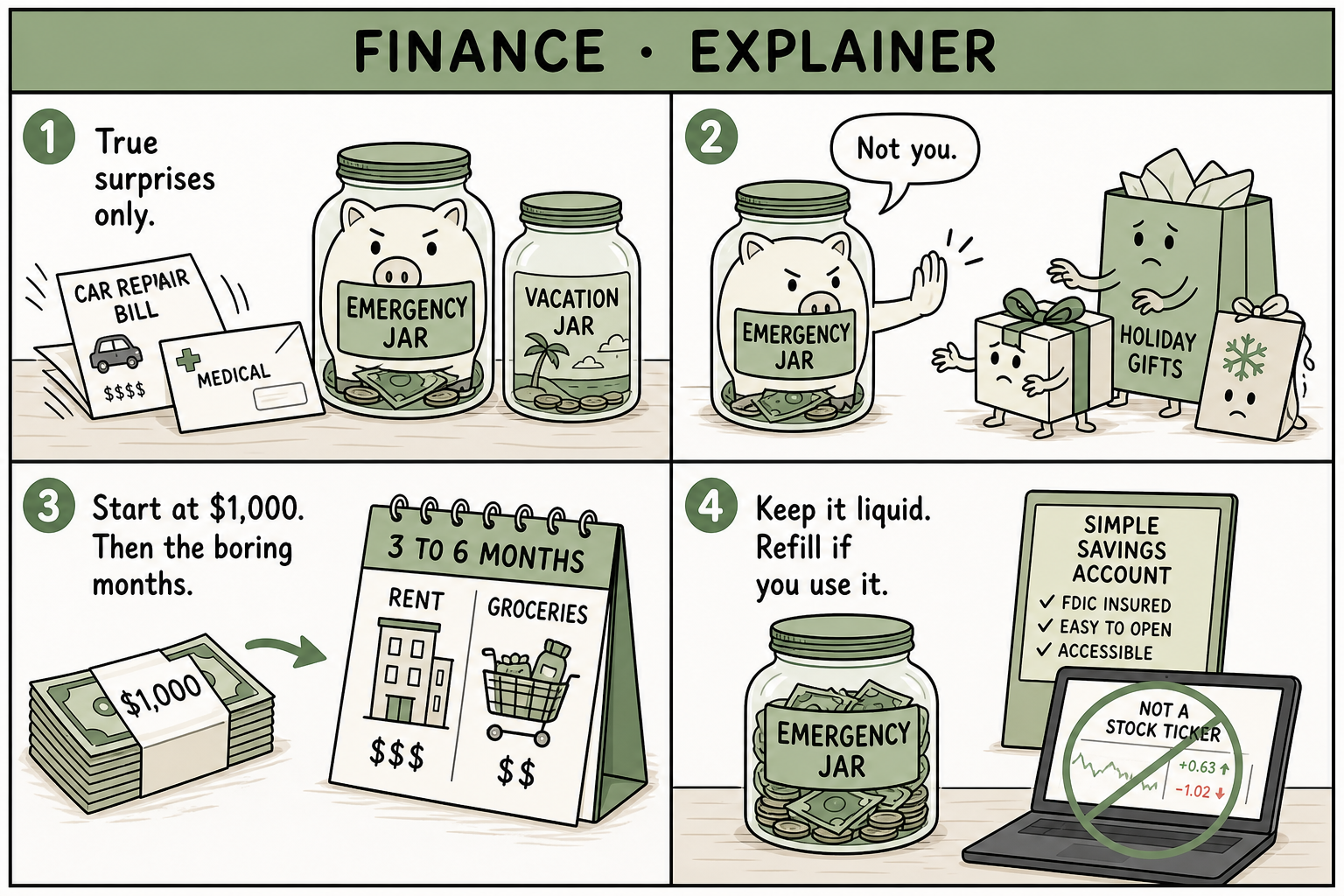
An emergency fund is cash for the bill that was not on the calendar. Fidelity’s list is the usual ugly surprises: a medical invoice, a repair, a sudden layoff. Holiday gifts and a non-urgent procedure do not count. Those belong in a different pile so the emergency jar is still there when the real one lands. The money needs to be liquid, meaning you can get at it without wrecking the value. That is the definition, and it is why the strip keeps a vacation jar off to the side.
Fidelity’s guideline is blunt: start with $1,000, then aim for three to six months of essential living costs. Essentials means rent or mortgage, utilities, groceries, health care, insurance, child care, transportation, minimum debt payments. Not the gym, not dinner out, not the vacation jar. You may choose more than six months if people depend on you, if the car or the house is a gamble, or if income is lumpy. That is a circumstance list, not a product pitch, and it is still education.
Why it matters
The explainer cites Federal Reserve figures that more than 37% of Americans would struggle with an unexpected $400 cost, and other survey numbers that almost half could not cover $1,000 and that 24% have no savings at all. For 2026, it says 29% of Americans have more credit-card debt than emergency savings. Swiping a card and paying interest can turn one shock into a longer one. Even insurance has deductibles and delays. The stash is there for the gap between the bill and the reimbursement, which is why liquid is doing real work in the definition.
How to start, in their telling: pick an account you can open without a penalty, treat the transfer like a bill, automate it, park windfalls there, and refill the jar after you use it. Round-up tools and canceled subscriptions are small hoses into the same tank. Use a raise to bump the transfer before lifestyle creep eats it. The point is not to never spend it. The point is to spend it on the thing it was built for, then build it back.
Conclusion
True surprises only is the rule that keeps the jar from becoming a second checking account. Start at $1,000 if you can, then count the boring months of rent, groceries, and minimums, not the months you wish you still had for a trip. Keep it liquid, not in a ticker, and put it back after you use it. This is education, not advice, and it is not a markets piece.
Source: Fidelity Learning Center