
Finance
Dollar-cost averaging is a schedule, not a crystal ball
What happened
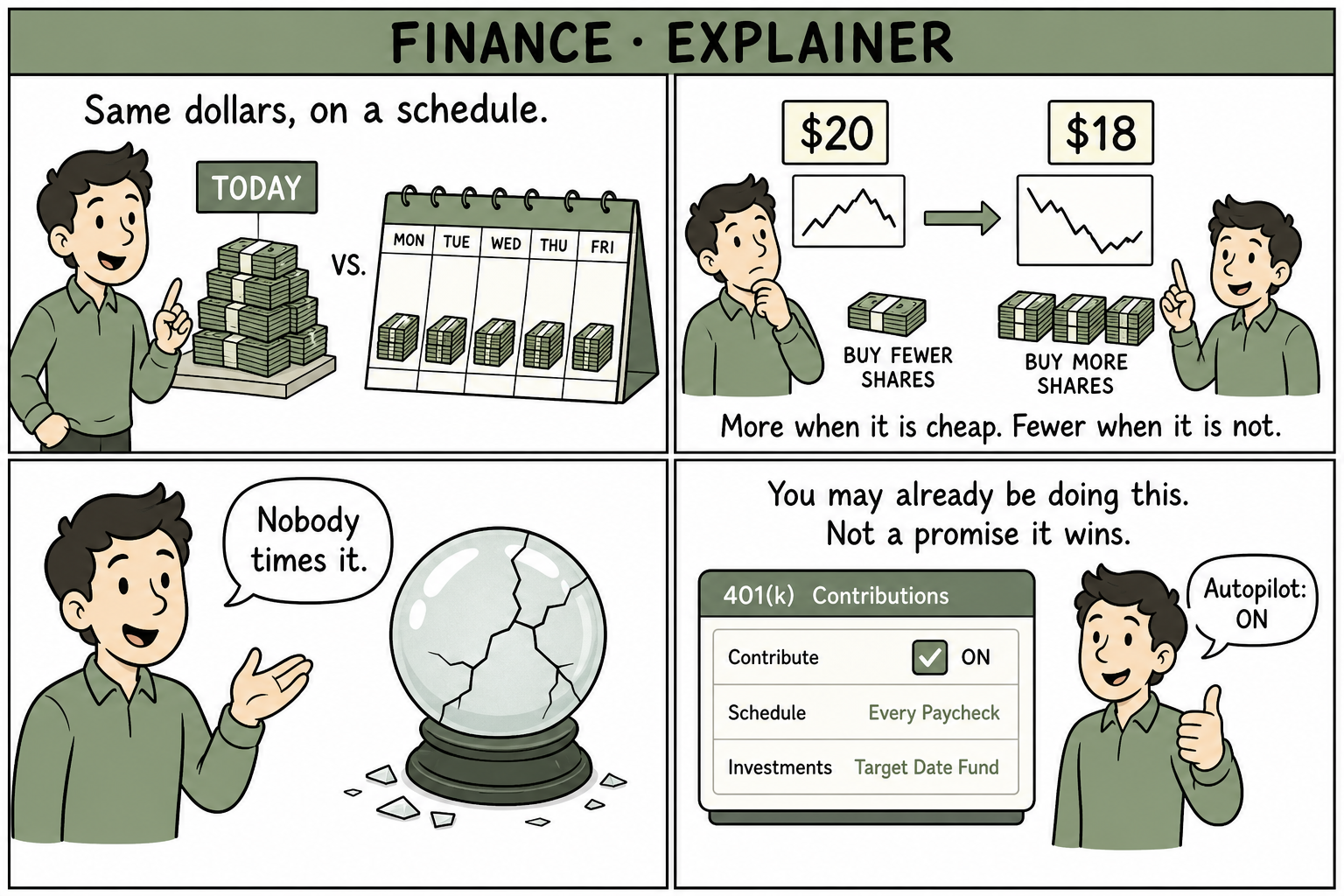
Dollar-cost averaging is a calendar trick, not a forecast. Fidelity describes it as putting in equal portions at regular intervals no matter which way the price is moving. The hope is mechanical: you pick up more shares when they are cheaper and fewer when they are not, which can soften the sting of buying everything on a high day. In Fidelity’s hypothetical, you have $5,000 and drip $1,000 a month for five months. At prices of $20, $21, $18, $19, and $21, you buy 50, 47.61, 55.55, 52.63, and 47.62 shares. That is 253.4 shares at an average of $19.73, versus 250 shares if you spent the whole $5,000 at the first $20 print. The table ignores trading costs and assumes fractional shares.
If the price instead climbs while you drip the cash in, you finish with fewer shares than a day-one lump sum. Fidelity walks that version too: an average of $21 leaves you with 238 shares instead of 250. Idle cash waiting its turn also earns little, except in a paycheck plan where you are investing money as you earn it, not parking a pile. The page is explicit that this last drawback does not apply to ordinary 401(k) contributions, because those dollars arrive on a schedule by design.
Why it matters
The other pitch is psychological. Timing is hard even for professionals. A fixed schedule can keep fear and greed from running the buy button, buying more because prices are rising, or panic-selling because they are falling. Fidelity notes many people already do this without naming it: a 401(k) contribution that hits the same funds every payday. That is dollar-cost averaging as a habit, not a market call. It might fit if you think a holding could sag in the short run and still believe in it over a longer one.
It does not prevent losses. It can mean leaving some return on the table. Trading fees on many small buys can nibble. Fidelity’s own summary is the honest one: it may mitigate some risk, and it might also mean you forgo some return potential. It only makes sense if it matches the actual goal. If you already decided on an amount and like the long-term case, a lump sum on the day you decide may be the cleaner tactic, the page says. Watch the fees either way.
Conclusion
A schedule is not a promise and it is not a market forecast. It is a way to keep putting the same dollars to work without pretending you can see next month. Fidelity’s hypothetical can finish ahead or behind a lump sum depending on the path of the price, which is the whole lesson sitting under the comic’s cracked crystal ball. This is education, not a recommendation, and it is not a markets piece.
Source: Fidelity Learning Center