
Conspiracy Theories
A 7-foot statue spent centuries face-down in a Roman road
What happened
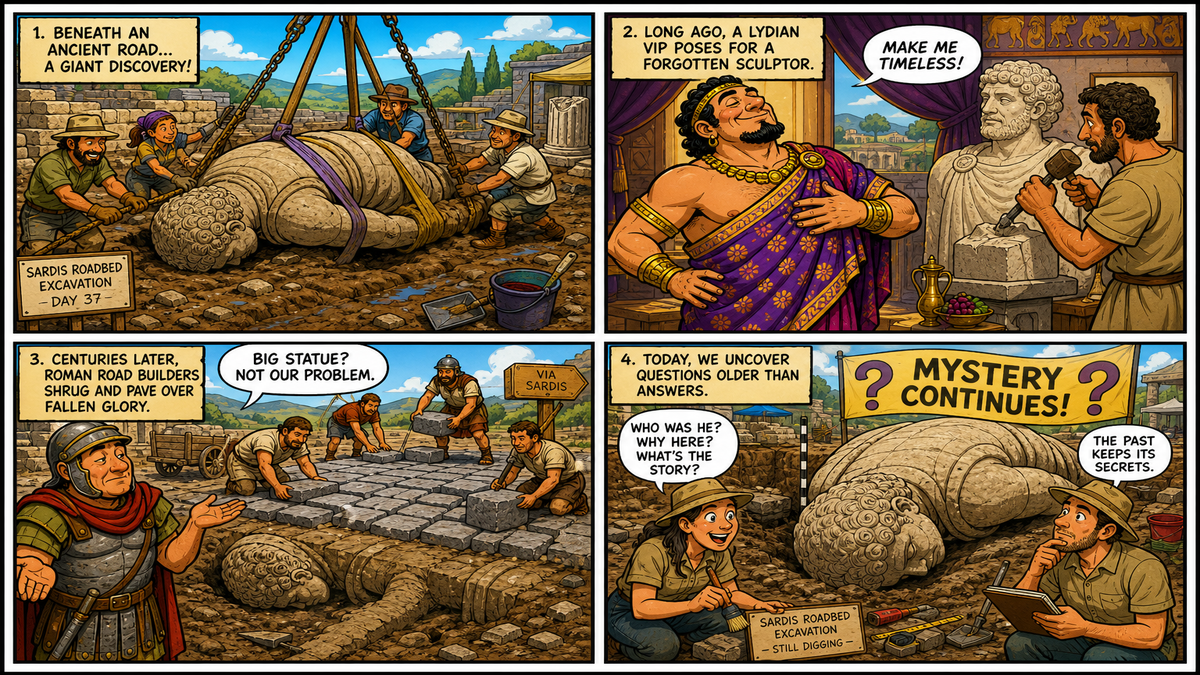
Archaeologists with the Harvard-Cornell Exploration of Sardis uncovered a roughly seven-foot statue lying face-down and broken in two just beneath the surface of an ancient Roman road, Popular Mechanics reported Sept. 4. Sardis was once the capital of the Iron Age Lydian Empire. The statue depicts a figure in a diagonally wrapped tunic with distinctive horizontal folds—features specialists say are unusual enough that dating the style has been difficult.
Whoever commissioned the statue clearly wanted to be seen. Road builders later wanted flat stone. The sculpture appears to have been reused as pavement, which is how a once-imposing portrait lost its pedestal and, with it, a clean path back to a name. Experts have floated that it may have come from a sanctuary of Cybele, where high-status people reportedly set up statues of themselves, but the sanctuary itself has not been located and the identification remains open.
This conspiracy/unexplained desk filing is pop-history and archaeology only: a VIP turned into roadfill. No modern politics, no grievance theories, no forbidden lore cosplay.
Why it matters
Ancient status is fragile. A statue tall enough to dominate a sanctuary can become gravel for an empire that arrives later with different gods and better road crews. The face-down burial is catnip for unexplained storytelling because it reads like an intentional erasure even when the mundane explanation—recycling big stone—is sitting right there in the trench. Both can be true in the imagination: practical reuse and a symbolic fall from glory.
For readers who like mystery without malice, Sardis delivers a clean puzzle. Distinctive folds. Hard-to-date style. A missing name. A Roman road that literally walked on somebody’s immortality project. The comic keeps the tone curious and colorful: dig, pose, pave, question mark.
Conclusion
A seven-foot mystery person spent centuries face-down under a Roman road at Sardis; the style still confuses specialists; the name is still gone. Full-color strip. Source: https://www.popularmechanics.com/science/archaeology/a73606639/imposing-ancient-statue/
Source: Popular Mechanics